Being a Decent Human Being is Hard Work

Conscience Just Ahead Green Road Sign with Dramatic Storm Clouds and Sky.Please forgive me, I’m very new to this whole “being a decent human being” thing. Really, I am. After a decade of intensive self work, I am still prone to lapsing from time to time, and thus will do or say things that are out of line.

I’m not trying to excuse myself from being offensive or sometimes outright shitty, but old habits die hard, and some ingrained habits of mine include saying some outrageous and shocking things. This also includes, but is not limited to being an asshole and insulting someone directly or indirectly.

For instance, when my first writing group criticized a sex scene in my adult contemporary novel (2nd novel I wrote called Me, My Self and Who Am I?)–a fellow writer told me, “they say write what you know, so maybe you should get some experience before you write a sex scene.”

And I replied, “experience? Wanna come over and smell my sheets?”

My college professor placed an arm down on her desk and said, “this is the line,” and then crossed her other arm over it saying “and this is Marlon.”

Everybody laughed, and I got off from it. Yes, pun intended.

I get it, some situations and certain people are open to it, but overall, it may or may not be appropriate in others. I’m left wondering if this part of me is worth keeping alive. It’s been a big part of me and one of the ways I’ve humoured people.

Keeping it or ditching it…that’s something I still need to figure out, but ultimately, I will commit to learning how to put on a bit of a filter for myself around those who may not be able to stomach it or just may be more mature than myself.

I think the reason why I make dark, cynical, and explicit jokes is because being plain ol’ me never got me that much attention. I want to grab at attention by saying shit that shocks and disorients people. It’s fun to see what limits and boundaries I can break sometimes and I wonder to what degree that kind of attention is even healthy for myself or others.

I don’t know…

I constantly wonder if trying to be a better person might include lessening or completely removing such behaviour because I do feel an immense joy in simply being kind, generous, and empathetic, instead of acting like a character from some adult sitcom.

(You know, that kind of character you love watching offend people and laugh your ass at, but would never want to associate with in real life, ie. Sheldon Cooper and Barney Stinson)

Being a decent human being is hard work, but hard work is often associated with having a high reward, and I think it’s even more true than with anything else. You can work hard at running a business, doing your job, or studying for school etc., but I think the hardest work anyone can do and have the highest reward lies in being a decent human being.

Not only are they in high demand in this world, for they/we are very rare, but really do make the world a much better place to have empathetic and understanding people. People who can own up to their actions, self improve, help guide others into similar behaviour (but in their flavour), and overall make the world a little less cruel and disgusting one interaction at a time.

So hey, I’m not perfect. Not yet anyway. And as I write this, one of my favourite songs has popped up on my iTunes by Kacey Musgraves. After everything is all said and done, having done my best to be the most authentic version of myself, “you can’t be everybody’s cup of tea.”

This is me embracing the duality of being genuine and douchey all at once. Take it or leave it.

How I Got Into Young Adult Novels Through Chuck Palahniuk

damned-headline-hi

I used to think that Young Adult novels were lame, because I assumed that you weren’t allowed to cuss or discuss dark and gritty topics. Of course, that’s what happens when you assume things; you make an ass out of u and me. Now that I’ve actually read a ton of YA novels, I am hooked!

And I actually owe it all to Chuck Palahniuk!

Although he writes mature adult novels–full of excessive vulgarity, disgusting details, and overtones darker than the night itself–I got into YA thanks to him. Most of his novels do feature adult characters getting into adult situations, most of which involve some awesome plot twists (Fight Club, Invisible Monsters, Snuff), but there’s one book of his that features a fat 12-year-old dead girl in Hell.

Damned follows the story of Madison “Maddie” Spencer, the daughter of two Hollywood big shots who are constantly too stoned out of their minds to give her any genuine attention or affection. She apparently dies of a mairjuana overdose, and is sent to Hell where she meets a group of other damned souls who become her posse of misfists.

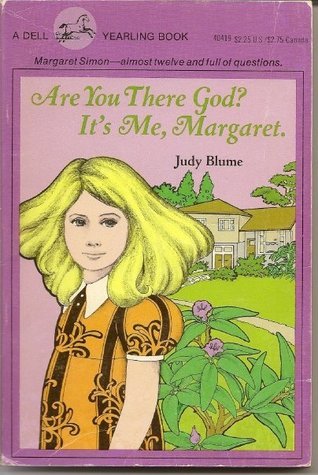
The book is often described as The Breakfast Club meets Are You There God? It’s Me, Margaret in Hell because each chapter begins with “Are You There, Satan? It’s Me, Madison,” and she shares the coming of age struggle Margaret faces in Judy Blume’s book.

Now, I’ve watched The Breakfast Club several times in my life and have always connected with the universal themes of the teenage struggle, but never once have I ever read a Judy Blume book. Why would I anyway? Aren’t her books written for little girls?

Apparently not!

Don’t get me wrong, I love Damned, but the sequel Doomed, felt a little overwritten compared to its predecessor. The narrative voice felt too intellectual and masculine to be that of a 12-year-old girl’s, but I read it anyway because I highly enjoyed the overall adventure of Maddie’s goal to confront Satan and find out why she had to die early and be damned to eternal torture.

(Chuck Palahniuk’s idea of eternal torture includes walking on hills of toenail clippings, passing by rivers of pimple puss and rejected human fluids, and my personal favourite; working at a telemarketing office to troll the people still alive on Earth)

So I got curious about Are You There, God? It’s Me, Margaret just so I can see how much of it actually inspired, or at least reflected the content in Damned. Aside from the chapter openings and having a 12-year-old protagonist, there was obviously a stark contrast that astounded me.

Gone were the supernatural elements, gross descriptions, vulgarity, drugs, and violence etc.

What I got instead was a story about a middle grader feeling left out because she’s the only girl in her class who hasn’t gotten her period yet. That made for a great a surface theme–since I’ve never considered what the female puberty experience was like, though it was a welcomed surprise–but what really captivated me about the book was Margaret’s struggle with her religious beliefs.


It surprised me immensely when I started noticing the bigger picture. Margaret was raised without religious affiliation; her father is Jewish and her mother is Christian–but pushed  neither religion on her–and so Margaret’s internal struggle, on top of her desire to get her first period, was trying to find religious singularity.

[spoiler]There was this epic scene where her grandmother and her parents argue about what religion she should conform to, but she gets so frustrated and cries out about how no one even is stopping to consider what she wants to believe in.[/spoiler]

Although I prefer to read more mature YA novels with older characters who do cuss and discuss dark topics, Judy Blume single handedly diminished my assumptions about YA. Now I have absolute respect for it because it’s now that I understand the appeal to it.

Being a teenager is an intense time in anyone’s life because it’s when we begin to truly begin to question our identities as individuals separate from culture. Our hormones and emotions are the most sensitive and although it’s such a small amount of time in our overall lives, they are the most intense, bringing with it the growing pains that shape us. The teenage experience is universal for anyone who has survived it.

Stay tuned for How I Conceived the Idea of It Starts at Home…

Music as a Milestone Marker

Music-is-the-fire-in-my-heart-music-35607170-471-458For the first decade of my life, I actively avoided music, but now I can’t go a day without listening to it. In the past month, I have spent $100 getting new albums from Rock bands I recently discovered. I. Can’t. Stop.

When I was growing up, though, everybody listened to Rap and R&B. I kept hearing the same songs everywhere and I couldn’t stand the lack of variety beyond the top hits. I have nothing against these genres– in fact, I actually have phases where I’ll listen to nothing but Rap and R&B–but it just wasn’t for me at the time.

The only music I ever enjoyed came from TV shows, movies, or video games. Otherwise, I never sat down and listened to anything for its own sake. But then came one of my favourite video games from my childhood, Donkey Kong Country 2: Diddy’s Kongquest. There was a level called Bramble Blast where most of it consisted of shooting Diddy and Dixie Kong through a bunch of barrells and the background music for the level was incredibly relaxing! Perhaps to contrast the chaotic nature of the barrells.

I was so enamored by this well crafted composition that I paused the game and listened to the song for about an hour. To this day, listening to Stickerbrush Symphony still captivates me with its simple and catchy melodies. From that point on, I had much more appreciation for the rest of the game’s music score, which I believe is still one of the best OST’s in gaming history.

David Wise, thank you for pushing the SNES’s 16-bit instrumentation capabilities!

When I beat the game and stopped playing it, I was left without music once again. It wasn’t until I stumbled upon a music video featuring an animation with the art style of Todd McFarlane, the artist and creator of my then favourite comic book character Spawn. That music video, my friends, was for Korn’s hit single Freak on a Leash.

That was when I realized Rock music was my natural element. I just love how the combination of guitars, bass, and drums can produce so many different styles of music alone. Whether the guitarists use clean channels and/or distorted tones–or in Korn’s case, a crap ton of FX pedals–I’m always up for a rockin’ riff that gets me headbanging. Especially if the band’s got a great vocalist who can belt out the power vox! Can I get a “hell yeah”?

I’ve since listened to other genres of music throughout my lifetime from Dubstep to Lounge, Trip-Hop, Pop and much much more, but the music I always find myself listening to is some sort of Rock. This could range from Metal, Mathrock, or even Pop Punk–WHATEVER! I’m not here to impress you with the long list of bands and genres I’ve listened to.

The point is; I’ve listened to a kaleidscope’s variety of stuff lo’ these past two decades or so.

Each and every band, and genre, is associated with a certain point in my life, and I am instantly reminded of those eras of my life whenever I go back in my collection and listen to something I haven’t listened to in a while.

Korn reminds me of my early teen years battling with anger and depression, the DnB, Trip-Hop, Lounge, and Ambient music reminds me of when I learned to relax a little more in my early 20’s. Fast forward to today, the vast collection of new Rock albums I bought recently will remind me of this particular time in my life where I’ve finally become comfortable with myself having delved deeply into self-knowledge and greatly improving my life circumstances.

I see music as a way of marking milestones in your life. When you spend enough time listening to a certain artist during a high or low point in your life, you’re training your brain to associate those tunes with that specific place in time.

After all, the media we consume is a reflection of who we are, it’s a piece of us. It’s how we identify ourselves in the world. By empathizing with the expression of art, we let it speak for us when we don’t want to explain ourselves, or we let it embellish our inner most thoughts and desires. Why do you think so many songs are about finding love?

Our particular tastes and preferences in music, art, and literature all have something to say about us. This is why we enjoy sharing these things with those we love. Understanding what others are entertained by is a quick way to understanding how they think and feel about themselves and the world.  All you gotta do is ask why it moves them so much, and they’ll tell you everything you need to know about them.

Do you have any favourite artists you’ve listened to consistently throughout your life? Or on and off for any particular reasons?

Do you continuously seek to expand your music library? Do you have any favourite artists that invoke particular memories whenever you relisten to them after taking a long break?

For anything else music related and how you relate to it, let me know what you think in the comments below!

The Very Heart and Soul of Fiction

fire-heartWhether your characters live on planet Earth or in a galaxy far far away, all fiction is really about is relationships. Conflicts arise in relationships due to the disagreements people have with each other’s goals and motivations, and the aim for good fiction is to avoid painting these conflicts in black and white.

What makes the most interesting character to character conflicts is when each party is (or believes they’re) right, but their opposition believes their needs and preferences take presedence over them. And I’m not just talking about the basic hero vs. villain dynamic: Hero wants to save the world, Villain wants to destroy it, big whoop.

Readers and viewers of fiction are drawn to moral gray areas because they allow the consumer to make their own decisions about who’s right or wrong according to their own moral code. It gives them the freedom to feel the way they want to about the events, instead of being spoon fed like melodramatic stock characterization so often does.

The Greatest Allies = The Greatest of Enemies

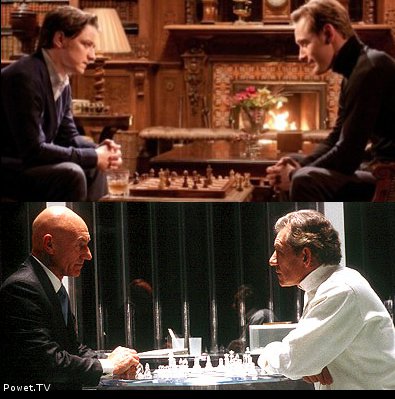
movie-xavier-and-magneto-chessSome of the best conflicts usually happen within the same alliance, as opposed to the standard “my team is better than yours,” spiel. Take the classic example of Professor Xavier and Magneto from the X-Men series, particularly the First Class storyline.

Sure, as seasoned veterans of the mutant war they each have their own teams of mutants on their sides, and are at constant odds with each other on what the fate should be for humanity’s relationship with mutants. But when they were younger men still discovering and developing their own respective abilities, they were friends. Together they formed the first team of X-Men that ended up dividing due to a conflict of interest.

Professor X wanted to train fellow mutants and help them understand their own unique powers, but wants to keep them blended into society, if not hidden from it completely. After all, the world would not have be ready to accept these strange individuals.

Meanwhile, Magneto wanted mutants to embrace their individuality and stand out from the rest of society. That they should be world reknown and a force to be reckoned with if they were met with disgust and indifference. This causes him to rile against a world that initially becomes afraid that such beings exist.

Professor X and Magneto admire each other’s abilities and tenacity, but this clash of values is what creates nearly a century long feud between the two. Yet despite of all the broken bones and epic fights between their factions, along with all the havoc and destruction the common populace has to experience amidst all this…the two can still kick back and have a nice little ol’  game of chess and chill like old times as old timers.

X-Men features a huge cast of different mutants, some more popular than others–

*coughcoughWolverine>Cyclopscoughcough*

and they all have their own ways in which they relate with each other.

Photo credit: http://www.examiner.com

How I Met Your Mother By Becoming a Better Friend

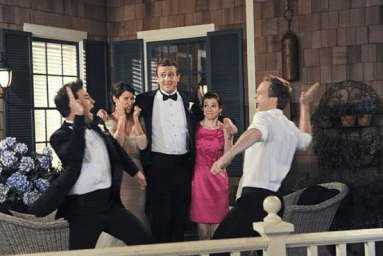
However, a personal preference of mine is to keep casts to a smaller number. A handful of characters is all you ever really need to write compelling fiction that’s rich with unique relationships between all individuals. Such is this case with one of my favourite sitcoms How I Met Your Mother.

Here’s a quick and digestable Mind Map I made to outline the value they each offered to the other.

himym relations

Fiction is Friction

Despite of the value characters can offer to each other, the assisstance in growth is always met with resistance from whom they’re trying to help, either intentionally or unintentionally. The most potent and blatant clash of values in HIMYM is between the hopeless romantic Ted and the womanizer Barney. They’re polar opposites, yet they’re best friends. Why? Because they have a lot to teach each other.

how-i-met-your-mother-season-9-spoilersBarney shows Ted how to have a good time, how to act instead of over thinking everything, and not be so stuck on finding “the one,” which ironically inhibits Ted from having any success. He’s got his head so stuck in the clouds that he needs Barney to pull him down to Earth.
Likewise, Ted teaches Barney the consequences of screwing around with too many women. He shows Barney that true happiness can only derive through monogamy as opposed to an endless string one night stands. Barney’s behaviour derives from a great place of hurt from his childhood and romantic history. Seeing his bestfriend Ted get hurt over and over again, but still have the hope that he could find his true love becomes, much to Barney’s detrement, an inspiration to him.

Ted and Barney undo each other’s illusions by pulling each other out of their extremes so that they can meet somewhere in the middle. But it’s not like they initially accept each other’s differences from the get go. It is usually met with messy and hilarious hijinx.

A Peephole Into Another Reality

Reading or watching a piece of fiction gives us the chance to eavesdrop on some of the most vulnerable exchanges between people. It cuts through the mundane day to day conversations about sports and the weather, and in turn, highlights the challenging and life changing conversations that most people tend to avoid.

We are drawn to stories because we get to sit back as objective and passive participants to watch how these characters maintain or diminish their relationships. Fiction helps illustrate how people from different walks of life can find common ground…or not. All fiction ends with either a resolution between people’s differences or an even wider divide between them.

What are your favourite ensembles of characters?

Do any of their relationships mirror some of your own?

What have you learned about relationships through your consumption of fiction?

How much more interesting can your fiction become if you focused more on character relationships and development instead of crafting a compelling plot?

I would argue that intense focus on character relationships and development CREATE compelling plots. Let me know wat you think!

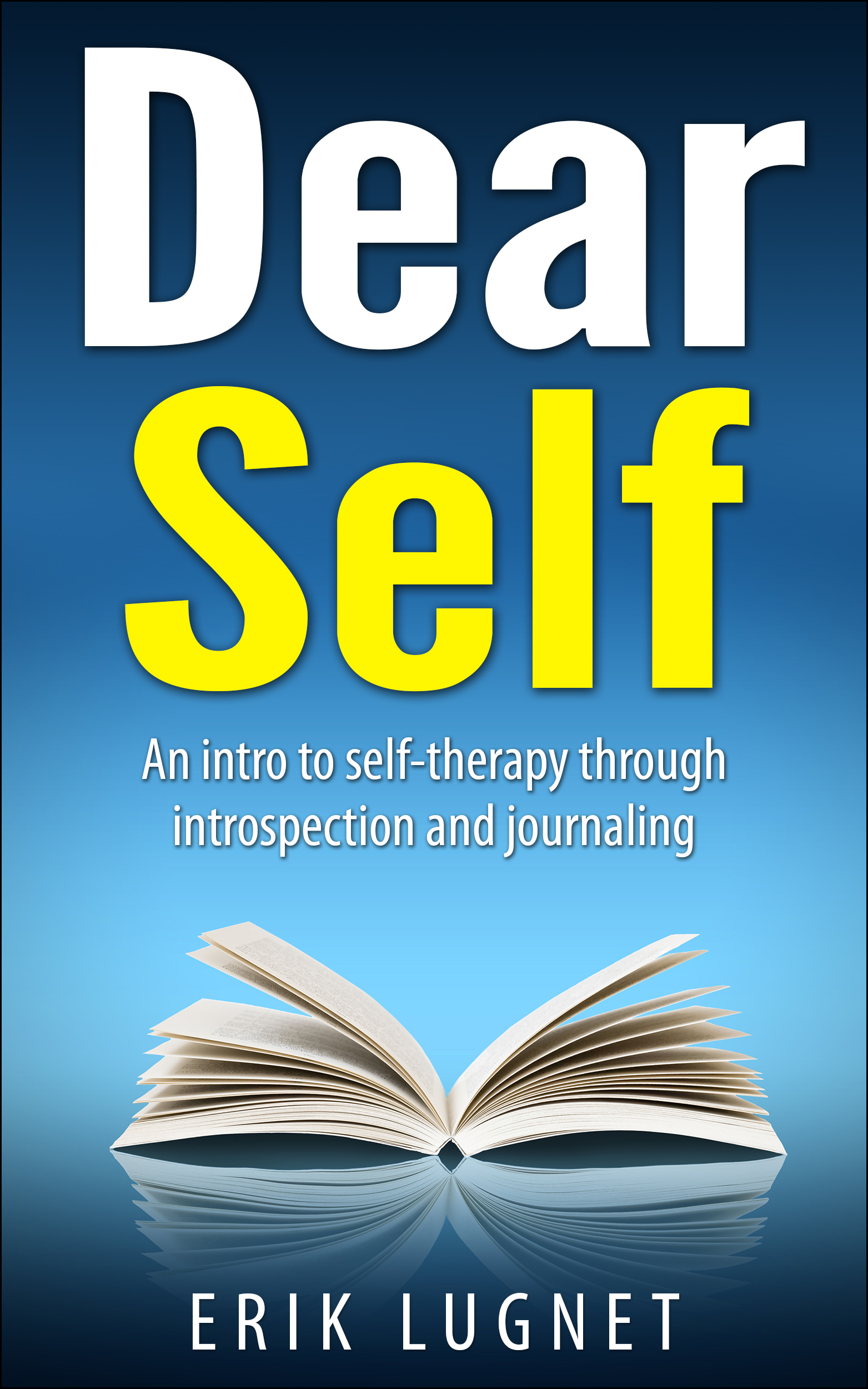
eBook Review: Dear Self by Erik Lugnet

dear self“Life can be difficult sometimes. It is not made easier by the sometimes overwhelming inner voices that criticize us into oblivion.”

So how can one climb out of this oblivion and learn to tame the inner dialogue that plagues many of us, thus preventing us from living happy, functional lives?

There are many answers to this question that require years of time, money, and energy invested into self work through journaling, therapy, and introspection. If that sounds like a daunting task, you no longer have to fear if the investment will be worth it or not.

With Erik Lugnet’s 17 page introduction to introspection, Dear Self gives you a quick and concise glimpse into the world of self-therapy and journaling. If you’re thinking of going to therapy, but are unsure if it may be right for you, this book is a great guide to trying out the process on your own to see if it may be up your alley.

The book begins with a list defining the traits of your True Self. It’s calm, empirical, assertive, honest, empathetic, curious, and compassionate. If you feel that you may have lost these traits due to the hardships of life, Dear Self makes a case as to how and why you could go about reclaiming your greatness.

Erik invites you to be curious and compassionate with yourself, and usually it does help to calm the storm in your head, but that’s not enough. Reworking your inner dialogue can be made easier by journaling and Dear Self briefly touches upon different mediums from the traditional longhand, to audio and possibly video. (What do you think vloggers are doing?) The invitation to write out your emotional experience in a gentle and patient way is possibly one of the simplest, but most powerful suggestions made in the book.

Then of course there’s also a small glimpse of Internal Family Systems to help understand the ambivelance most, if not all of us experience when it comes to understanding our emotions and motivations.

You do not need to be fully educated in the IFS approach to understand this aspect of Dear Self (though itis suggested) because it is explained in such an obvious way. Basically, our entire beings are comprised of different sub-personalities, and Erik’s main principle remains: learn how to approach these parts with curiousity and compassion.

At the beginning of the book, the caveat is put forth that a lot of what is shared is due to personal experience. I didn’t get that impression until much later in the book when Erik begins to talk about specific examples from his real life, most notably in the closing section that barely scratches the surface of the journey he’s been through. I believe that more examples of his own IFS conversations and journaling experience could have enhanced those sections to make the book feel less formal and more intimate, since intimacy with The Self is what this book is meant to promote.

Furthermore, in the section covering where The Self has gone, there is the example of a mother who is easily disturbed by noise, and how that might affect how she would raise her child as just an inconvenience. I think that example could have been fleshed out more if there was a bit more detail about how and what may have caused her aversion to loud noises by going into her history with possibly being yelled at, or witnessing loud confrontations between her parents to drive the point home.

There are also a few misplaced commas and syntax errors a simple re-read can fix, but all in all, Dear Self is a quick and concise read that should help you start on your path to self-knowledge. A revised and possibly a slightly extended version can help work out the kinks of this powerhouse of a debut book.

If you’re still wondering if the investment in yourself is worth it, I would argue that it would be. Because self-knowledge is a fundamental human trait, and without it, how can we possibly know how people relate to us if we don’t even know ourselves?

You can download Dear Self by Erik Lugnet for free at Smashwords, or if you’d like to support my friend and purchase it for $0.99, you can do so at Amazon!