Why Subtitles Improve Your Writing

“Marriage?” He scoffed. “We can barely afford this house.”

“But we’ve been together for 10 years,” she whimpered.

He sighed and leaned back with his chair creaking beneath him. “You’re right, but–“

Have you ever come across these kinds of expressions while reading a book and wondered what they meant? Or maybe your mind filled in the gaps based on the context of the scene? Whichever was the case for you, I highly suggest that whenever you watch a TV show or a movie, that you put on the subtitles, even if the characters speak your native language.

Here’s why:

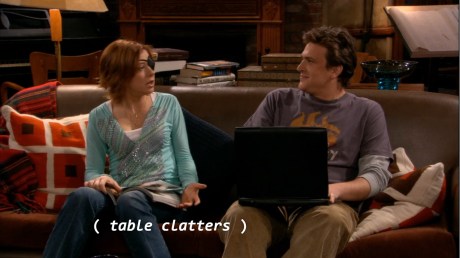
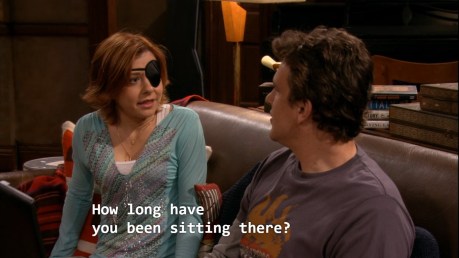
lily 0lily 1lily table clatterlily 3lily 4

Watching TV shows and movies with subtitles on allow you to learn three fundamental things:

  1. How dialogue is written
  2. What sound effects and expressions sound like
  3. Rhythm and beats of a scene

1. Dialogue

The most obvious reason why you should try watching TV shows and movies with subtitles on is to see how punctuation works, and maybe even expanding your vocabulary with new sophisticated words characters may speak.

If the characters are also incredibly nuanced in the way they all speak, seeing the phonetically written versions of their speech along with listening to how they deliver their lines, will also help you get a sense of certain word patterns different characters use. Do they speak in long bursts with little to no breaks in between words? Do they seldomly speak? What kinds of words do they often use?

For extra measure, having a notepad ready to jot down your observerations can help inform the kind of unique dialogue your story may benefit from.

2. Sound Effects and Expressions

With that opening sample scene I came up with, despite the lack of detail, I’m sure you can get a sense of how the situation might feel like for both the man and woman. Even if you don’t know what a scoff is, you can sense that it is something he is passive aggressively dismissing based on his following dialogue.

While you can get away with knowing what special words like scoff and whimper mean, you might run the risk of misusing them in either having them used in the wrong context, or simply breaking a certain character’s personality.

The man in this sample scene is anxious about marriage due to finances, and it doesn’t sound he really loves his girlfriend. If he did, maybe his sigh would come earlier because marraige is something he does want, but his financial woes get in the way.

Furthermore, the creaking of his chair can add to that scene to convey that he and his girlfriend are indeed in financial trouble, so much so that they are sitting at a table with low quality wooden chairs that creak.

Watching something with subtitles on can often help you hear what all these non-verbal expressions and environmental sound effects may sound like. It wasn’t until watching some TV shows and movies with subtitles on did I truly understand the difference between laughing, cackling, and chuckling.

3. Rhythm and Reason

Referring back to those screenshots of the scene from How I Met Your Mother, I originally wanted to only post pictures two, three, and four, but then realized I would be depriving you guys of this fundamental lesson. Watching with subtitles on can also help you understand the rhythm of a scene.

The first shot is silent, with Lily and Marshall sitting next to each other minding their own business. Marshall calls Lily’s name and she nearly jumps out of her skin because by screenshot number three, she is startled and hits her legs against the table causing it to clatter. She asks Marshall how long he’s been sitting there and in the final screenshot, she curses having the eye patch for obstructing her vision.

Had I not put the first and last screenshots, this scene would have no set up and no pay off. It would be devoid of context and the impact of Lily’s fright wouldn’t feel as full without that silent moment between herself and fiancee. Furthermore, without the final screenshot, the scene wouldn’t be as funny without her cursing the eye patch.

Learning how subtitles are spaced out between a scene, as well as how sound effects and expressions interject between what the characters are saying, can help you establish in your own work the rhythm and pace to which your characters interact.

I will definitely write more later on this concept of rhythm and beats in a scene, but for now, what I would like to emphasize is how helpful it is to get a sense of how that all feels on your own terms.

So give it a try; watch your favourite TV show and movies with subtitles on, specifically your favourite scenes in each story to see why they move you the way you do. You will be surprised by how the spacing between lines drastically affect the feel of the scene, as well as the new vocabulary you might come across in terms of non-verbal expressions and environmental sound effects.

Did you find this unorthadox writing tip helpful?

What has been your experience with subtitles?

Do you have your own piece of unorthadox writing tips? Feel to share all this and more in the comments below!



Your Novel in One Chapter

fightclub17.jpg

When I go shopping for a new book to read, I like to open potential purchases to the halfway point and read whatever I stumble upon. Why that’s madness, you must say, how will you know what’s going on dropping in the middle of all action? You need to start at the beginning! 

I assure you that I at least flip a few pages back to make sure I’m reading at least the beginning of that midway chapter. I’m not a monster.

My reasoning behind this is because I want to know if the author is able to maintain a strong focus on theme, characters, and plot throughout the entirety of their novel. Something always needs to be happening that not only progresses the story, but also encapsulates the spirit of all that has transpired so far.

Simply put, every chapter in a novel should encapsulate the entirety of the novel in and of itself so that if you were to isolate any chapter from the novel it belongs to, it can read like a self contained short story.

One of my favourite books actually started off as a short story that then became a much later chapter in the full novel of Fight Club by Chuck Palahniuk. It’s the chapter where The Narrator shows up to work with cuts and bruises on his face after having fought in a fight club the night prior, and nobody at the office has even the slightest nerve to ask what happened to him.

This is such a great story in itself because it raises so many questions and depicts something completely out of the ordinary. Despite it being very minimalistic in its narration, it is actually a very jam packed experience.

What I personally love about Fight Club and Chuck’s work in general is the ability for his stories to tell a lot without saying much. It’s pretty much implied how bored The Narrator is with his 9-5 job and life in general if he’s willing to get beaten to a bloody pulp at a late night underground fight club, and not even call in sick the next day.

Encapsulating a Novel Into One Chapter

Basic Plot


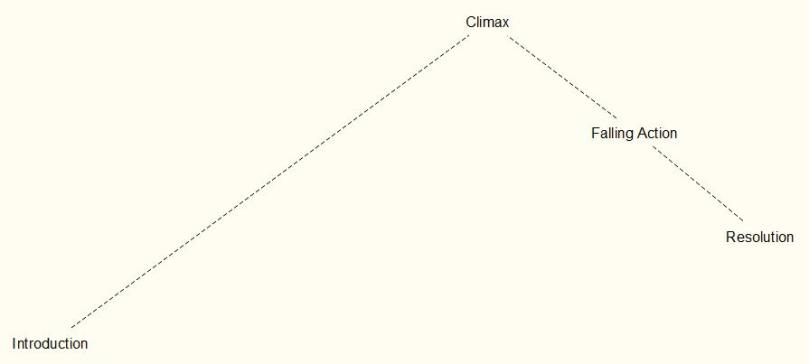
So this is a very basic plot line graph commonly used to organize the entirety of a novel. It helps you introduce your characters, settings, and themes, and build toward a climactic moment that defines the whole story. This allows you to easily detail the story into three acts: beginning, middle, and end.

What I’m proposing is structuring your chapters in the very same way as if that chapter defines your entire novel if it were to be taken at face value. This way your story has a strong emphasis and focus on what it’s all about at all times, with very little time allotted for the story to drag for a moment.

And that’s not to say that pacing wise stories aren’t allowed to slow down, of course they are, that’s when some details get the time to sit and simmer with the reader. Likewise, if a chapter is short and quick paced, the very little details you provide should still be just as fleshed out with knife like concision, very much like the original short story that later gave birth to Fight Club.

In order to create a well focused chapter, even to you pantsers out there, I highly suggest using a chapter graph that divides chapters into three scenes, and even having those three scenes divided into three mini acts of their own like this:

Chapter graph

Every chapter you write won’t have a clear cut structure like this, and like some rules, you might break these guidelines from time to time, but generally this is the structure that ensures your chapters can also function as self contained short stories.

Click here to download your FREE Chapter Graph!


There, Their…They’re Everywhere!

Homonyms! There There

They’re everywhere and their usage seems to change here and there.

What’s a homonym? It’s a word that sounds the same as another word and may or not be spelled the same, but most definitely has a different meaning. Today we’ll look at the big three T’s that are commonly used and confused.

When To Know They’re There For Their Own Good

A lot of people seem to confuse these three bewitching words pretty often, and it’s understandable since the sound is used in common everyday conversation. I don’t say this from a high horse, but I rarely ever get them wrong, at least now I don’t. Here’s a little system that helped me remember which witch is which.

There – In Reference to a Location

When you ask somebody the whereabouts of a location you ask “where is it?” And if they’re kind enough they’ll respond, “over there.” An easy way to remember this one is to form the association in your head between the words where and there.

For extra measure, you can also remind yourself to replace the W in where with a to make there. 

(Where – W) T = There

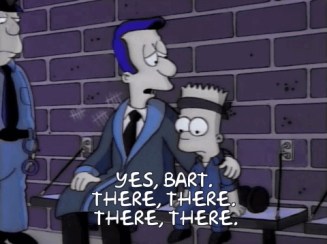
There, there, you’re getting it, right? Moving on!

Their – In Reference to Ownership

What are the three important letters you need to remember when you lend someone your favourite video game without getting anything in return at the time of exchange?

I.O.U. which is something you should scribble down on a napkin to create a lawfully binding agreement that they’ll owe you something in return later.

I wish I kept that in mind 15 years ago when I lent my friend Tenchu 2: Birth of the Stealth Assassins. It took him five years to pay me back the amount I spent on getting a new copy because he lost my original one. *Shakes fist* but let’s not dwell on the past shall we?

When I say it’s my video game and not yours, (but you can borrow it for now…) those two words imply ownership by a person.

So to remember to spell this one as theirlike to keep in mind that while I‘m referring to someone else, in their point of view they refer to themselves as “I.” I would be referring to your ownership in third person perspective if I were to use their.

I know that one is kind of convoluted, but simply put:

Your + Speaking of You In Third Person = Their

(Third the D) + E + shifting of the letters = Their

They’re – In Reference to Several People

It’s a contraction of the words they are.

C’mon, it can’t get any easier than that.

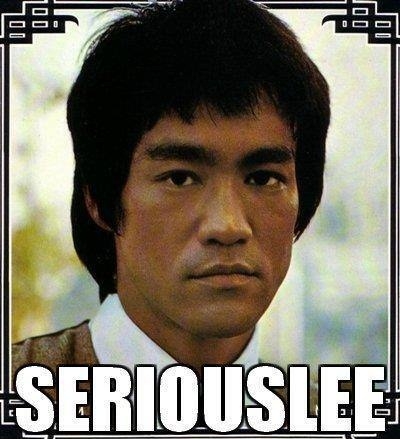
seriouslee


What other homonyms would you like some clarity on?

Was my pseudo word math a bit too much?

Did you find this post helpful?

Make sure to let me know in the comments below!


Blooper Reels and Humility

woopsI don’t know about you, but I personally love watching blooper reels from TV shows and movies. It’s nice to see the imperfections in performances before the piece gets polished up into consumable perfection. But while it is enjoyable to watch highly skilled and highly paid actors mess up their lines, break character, and fumble over their words, it is often hard to look at our own mistakes with the same amusement.
Why is that? I think I’m starting figure out what it is about blooper reels that make them so appealing, and before I shed my thoughts on that that, allow me to share the process that sparked my revelation.

Today, I am trying to edit my BSBS Review for The Girl on the Train and the whole recording process took about an hour and a half to do last night. This includes me gaining momentum in delivering my point, only to lose steam, delete the recording, and start all over again. The more I record, the more I have to edit, and I often fear that process.

It’s the same almost every time; I feel like I need to get it right the first time or I shouldn’t keep the recording. Then I eventually  tell myself that this is what I have editing software for! To cut through the awkward pauses between my points and compress them together in a deliverable format. Even then, it’s a battle between getting it perfect and getting it done.

When it comes time to editing, that’s where the real fun begins. That’s where I can create the illusion that I am a coherent speaker who can stay on point and deliver my message clearly and concisely–when in reality, everything that happened in between some of the cuts is anything but concise, clear, or coherent.

The more mistakes there are, the more shame I feel about it. I have all these thoughts and opinions about a story locked up in my head, all begging to be expressed or it’s going to bug me for not being able to share it. Having difficulty in conveying my thoughts adds to the pressure of wondering if it’s even worth doing these reviews considering that my videos have had hit or miss engagement in terms of viewership, comments, and likes.

o-star-trek-the-next-generation-blooper-reel-facebook-702x336

Did I Really Just Say That?!

After an hour or two of editing the initial recording and cringing at my mistakes, I eventually start laughing at myself for not only the bloopers, but also laughing at how stressed out I get from them. I know it’s horrible, but I often compare my moments of impeded speech to the way that Jimmy Valmer kid from South Park stutters when he speaks. Sometimes to the point of taking a whole minute to say a simple five word sentence. And Jimmy has it worse!

When I’m finally done experiencing all this creative mania, I relax and decide to just get the job done.

It’s not about the viewership, the likes, or even the comments–though of course, these are things I would greatly appreciate. It’s more about me having fun with reading these books and giving myself the treat of watching it all play out on the big screen. Not to mention  the chance to goof off on camera and deliver my thoughts in a place that doesn’t remain stuck in my head are huge pluses.

Sometimes…

  • The first recording gets edited to completion and uploaded anyway. I realize it wasn’t as bad as I thought it was going to be.
  • The first recording gets edited to completion, but it still sucks despite my attempts at polishing it up. I see it as a rough draft/rehearsal to show me where I can improve in the re-recording.
  • Right away, I see how horrible it’s going to be. At least I don’t have to fear messing up THAT badly again, and I can jump back into the studio with much more confidence! I know I can do better, so I’ll do better.

Cut! Action! Print!

movie-production-clapper-board_249x201I’ve been doing BSBS Reviews for 9 months now and this is how it’s been for me. Today, I resolve to accept it as all part of the process. As much as I would like to get it all right the first time, it is incredibly rare for me to record a 15 minute video with not much editing required vs the usual 30-60+ messy minute mania.

Maybe one day I’ll be able to deliver my point without any editing and master this lip flapping, tongue slapping, noise making device installed in my face. Until then, I’ll keep practising and polishing up my craft.  I will accept that this may be my process for now or forever.

This is what made me realize why blooper reels are so fun to watch. There’s humility in showcasing some of the mistakes actors have made before post-production. It’s to show that they’re human too and just trying to find their way through the scene.

After all the missed cue lines and involuntary laughter, they eventually get it done. And more importantly, even though there is work to be done, the production can still have fun in the process. It’s nice to hear laughter erupting in the background from the people who are off screen, along with the ones on screen, because that signals to us that it’s okay to make mistakes and try again.

We just have to keep working at it until we get it right. If we care enough about what we want to create in our lives, we push through all the difficulty and learn from our mistakes. After all, every expert out there was once an awkward novice. No one is born skilled. Talented maybe, but I agree with Will Smith when he says talents are useless until you practise to turn them into skills.

The final product may be close to perfect, but the process doesn’t have to be. Creation is usually a messy experience, but that’s where the fun is at!

The Four Pillars of Fiction Part 4: Dialogue

So you got your plot, your characters, and the setting?

All that’s left to do is make these people talk, and following in the principle provided in this blog series, what they think and say needs to serve a purpose.

RM_05.15_ff_riskdialogue

Why Don’t You Say it to My Face?

When characters speak in fiction, it is meant to resemble a more concise version of human interaction. It subtracts the filler pleasantries and zooms in on the most important aspects of a conversation, and so any small talk topics like the weather and sports should be exempt from dialogue.

Unless, of course, weather and sports are important aspects of the story…

Otherwise we love experiencing fiction because we get to eavesdrop on people’s most vulnerable conversations.

Sound creepy? It kinda does, but these characters aren’t real!

Or are they?

Well, they are only as real as you can portray them in terms of their emotional reactions to their interactions with each other and the world you created for them.

Dialogue should reveal four things:

  • Plot
  • Setting
  • Character
  • Relationship

To reveal plot, characters need to talk about the central theme and objective in a way that lets you in on the most crucial concern in their world. Perhaps it’s poverty in a post-apocalyptic world, and so the characters will talk a lot about how there’s a shortage of food and shelter after some devastating event that destroyed their world.

Everything they talk about should be about survival and rebuilding their society. In doing so, they also get to reveal the setting since it serves as a backdrop for the plot.

Along with exposition and narrative, talking about the place they live in is another way to help describe the setting. As a viewer, we will see their world in a certain way, but it’s interesting to see when a character’s views contradicts ours.

Perhaps the post-apocalytpic world might seem bleak and hopeless to us, but the inhabitants and the way they speak can reveal how much hope they have in their own survival. Furthermore, it can reveal what kinds of bonds are created in such hardship.

As Long as We’ve Got Each Other

conversationSo on top revealing plot and setting, dialogue must also reveal character. When people talk, they are always revealing what they think and how they feel, whether they intend to or not. It’s inescapable. Each person is equipped with their own unique way of expressing themselves in terms of what they value and what they want.

Now it’s tricky because you don’t want your characters blatantly saying “we live in an apocalytpic world and starve every day.” You have to find a way that makes it sound natural, much like every day conversation, but of course remembering to always keep it concise and in relevance to the plot.

Life would be much easier if people were more direct and honest about how they feel and why they have those feelings, but we usually end up expressing all that in different ways that can be interpreted in different ways since we all have our own subjective experiences and opinions.

Because we all have such differing preferences and opinions, we often end up in arguments revealing what we all expect of each other and the world, thus revealing how we relate to each other. Where we differ and where we have commonalities is the bridge between two people, and there’s a push and pull dynamic that occurs in fiction and in real life.

We often want people to like the same stuff as us, but without the difference of opinion we would not have the privilege of being challenged to re-evaluate our values, feelings, and beliefs.

And that is the very point of fiction; to allow us to safely and passively experience a manifestation of our inner clash of values played out to us in another real with its own metaphysical and epistemological laws. With characters who represent different sides of ourselves and we get the chance to pick and choose, based on the consequences of their actions and interactions, what values and beliefs we must keep or discard–all done in a way that entertains us while informing us.

Semi-Final Words

Thus concludes The Four Pillars of Fiction series, thank you for your time. Let me know if these posts have been helpful and if you have any feedback or criticisms on how to possibly improve future and current writing tips, let me know! I’m always more than happy to hear your thoughts whether they’re simple kudos, questions, or criticisms.

Stay tuned for The Four Pillars of Fiction BONUS Post, where I will be using my own novels as examples for each aspect of fiction covered in this series…