The Three Keys to Go From Preator to Creator

I once had a conversation with a wannabe musician where they were bashing modern mainstream music by saying how unoriginal and uninspiring it was, and how if only he could make music, it’d be so much better than the “garbage” that gets massed produced these days.

After ranting and raving about the state of the industry he finally said, “I want to write music that’s original that no one’s ever heard before.”

“Okay,” I said. “Then what have you written so far?”

“Nothing yet,” he replied.

And without a moment’s hesitation, I retorted, “then mission accomplished.”

Sick burn, right? Somebody call the burn unit and get this man some aloe vera!

All joking and arrogance aside, though, this is an unfortunately common conversation I have had with some would be creators. I can’t even consider them as creators because they haven’t created anything yet. I like to call them “preators.” They’re always in the pre-planning stage of creating anything, but never actually put pen to paper or strike a single stroke of paint on their canvas.

All they do is blow hot air about how much better their work would be than the stuff that’s already out there. And even if they do create anything, their output is rather limited and unrefined, and with a little bit of work could actually contend with their imaginary contemporaries and rivals.

But they don’t.

Instead, they choose to cling onto their opinions and spout their “hot takes”—that are really just lukewarm at best—and spend most of their time criticizing established works that have been published, screened, and viewed by the masses. Why? Because it’s a lot easier to say something is bad than it is to actually do something that is better than the things that they disparage.

A true creator would respect the work of others who have put their skills and taste on display, and no matter how bad those displays may be, these preators would at least respect the fact that if there’s even the tiniest of an audience for this work they deem so bad, that it at least resonates with a tiny minority of people.

Whether you know a preator, or are one yourself, today I will discuss what it takes to go from preator to actual creator.

Here are The Three Keys to Going From Preator to Creator:

  1. Humility
  2. Courtesy
  3. Authenticity

The Key of Humility

Now before I get too far into the deep end of criticizing preators, I should touch upon the good interactions I’ve had with creators and my experience with turning preators into creators. Back in 2016, when I was a writing coach, I had the honour and privilege of working with some very bright and talented writers. They had great ideas, but had trouble executing them, and that’s where I came in to assist them in refining their ideas and habits so that they can finally find the confidence to put pen to paper.

Sometimes my fresh new suggestions for their stories were adapted, but most of the time a lot of my suggestions were considered, but my clients themselves came up with even better ideas than me. I was very proud of them for this and took as little credit as possible because ultimately they were the ones doing the work. All I did was provide the space for them to geek out about a project that they were passionate about while also asking just a few questions that would nudge them in the right direction.

How this was possible on both sides was thanks to a whole lot of humility. For them, it took a lot of humility to accept that their work needed some work and looked to me for some guidance. Then on my end, it took a lot of humility to accept that a lot of my suggestions were going to get rejected and sometimes even challenged. While it was gratifying to see my ideas show up in their next chapter, what gratified me even more was seeing them building something even better than what I suggested, and even more importantly, seeing them build something way better than what they started with.

To go from preator to creator is to accept that your work is not gonna start off as absolutely awesome. There are very rare cases where natural talent just allows someone to create a masterpiece from the get go, but in reality, 99% of the time, it takes a lot of hard work and practice to get proficient at any craft. You have to take classes or find some other alternative way to learn things, and with the advent of the Internet it’s even easier to find resources that help in this matter. From Skillshare classes, to free YouTube videos, or even hiring a Creative Consultant like myself, there is absolutely no shame in looking for help.

Returning back to the wannabe musician, he claimed that learning music theory would only stump his creativity and that he wants to break all the rules to make something truly magnificent and original. I’m sure in his mind, in all earnestness, he believed that that is what the current music industry needed. A huge break away from convention and something that’ll catch people off guard.

Well to that, I call BS because you have to know the rules before you can break them, and you don’t just do it for the hell of it. You do it if it helps the music improve. Yes, there are a lot of successful musicians out there that don’t know music theory, but that’s not the point. The point is that they still have to work hard at their craft to be in the position their in, which leads to my next point.

The Key of Courtesy

You gotta have respect for published works, no matter how bad some of them may be. If it’s viewable by the general public, that means a creator actually had the courage to put their skills and taste on display for the world to see. Creating is a very vulnerable thing to do because it can easily scrutinized and misunderstood when you intended something entirely different.

Look at Joel Schumacher’s Batman & Robin film, for God’s sake. The man literally apologized for disappointing some fans with its over the top campiness and not being what people wanted or expected, then admitted that all he wanted to do was make something entertaining. May that man rest in peace because he gave it his best shot and was met with horrible criticism for something he simply wanted to have fun creating. Horrible as that movie was, I was at least entertained by it as a kid and it had an awesome soundtrack. It should not define his career.

It’s super easy to be passionate about a piece of art that just works on several levels. For preators stuck in the pre-creating stage, what you gotta do is be unabashedly proud of what you love and are inspired by, and do what you can to learn why it resonates with you so much. Far too many people think they look cool for criticizing something bad like Batman & Robin or even the Twilight Saga, but that’s just low hanging fruit. You want to be original? Then have the courage to express your passion for something you love because that’s all too rare these days with the advent of clickbait YouTube and Twitter criticisms of the latest film, book, or show.

Once you’re comfortable with having courtesy to acknowledge the creators you love, make that courtesy common by also giving it to the creators you might detest or at the very least think little of. Creating ain’t easy, and if you’re a preator, you might even bash things to hell because you’re actually intimidated by how hard it is to contend with even that.

But instead of seeing as everything and everyone as competition, see them as inspiration for you to do something similar. Similar, but not better. That’s for the audience to decide, not you. Your job is simply to create something and to do so from a place that isn’t bogged down by ego and wanting to prove a point. There are only a handful creators who create out of spite, greed, and malicious intent, but most of them out there are creating things from the final key that will unlock the creators within the preators.

The Key of Authenticity

To get that authentic stamp of approval, a creator must also be authentic in their approach. Their goal should not be fame and fortune. Fame and fortune should be the natural byproducts of their hard work, but not the end goal. A creator’s goal is to create something from an intimate place of authenticity. It sounds a little woo woo right now, so let me elaborate.

We’ve already beaten the dead horse of that wannabe musician from the intro of this post, so let’s talk about someone else who actually does know music and plays it. There were these fellow metalheads I once knew who actually did have some musical talent. One was a drummer and the other one was a saxaphone player. While they were friends with each other and myself, they both had other sets of friends who they intended to make bands with. So as someone who has been in a few bands in the past, I was intrigued to hear what both of these guys would produce.

I was expecting either of them to record a shoddy smartphone video of them jamming with their friends or put something up on Soundcloud for me to hear, but you know what happened instead? Months went by where both of these guys were flat out living the preator stereotype of trash talking musicians who are signed by labels, all the while only talking about being in a band without actually being in one. While these were two different guys with two different sets of friends that could’ve been bandmates, their stories were pretty much the same.

All they did was complain about modern metal and how so many good bands are selling out to make money and become popular. What did these guys do though? They talked endlessly about how they were just talking with their friends about what kind of music they wanted to make. “We want to make something like this band used to make, but better.”

Once again, I asked one of my douchey questions and said, “oh, okay, cool. So have you guys written anything yet?”

And both of their responses were to the effect of, “well we’re just talking about it right now.”

Preators talk the talk.

Creators walk the walk.

The fact that they didn’t even get together to jam and see what their musical chemistry is like was baffling to me. It was just a bunch of arrogant dudes trash talking the established bands out there, claiming what they’ll make will be so much better, but have little to nothing to show for it.

For a preator to become a creator, you need the humility to know that you’re gonna be very amateur at first, and maybe even for a very long time. Then you need the courtesy to respect those who came before you and even seek help from someone to get some mentorship. And lastly, you need to just get started and do something. And do it without the pretense of being amazing or even better than what should simply inspire you to do what you do.

From Preator to Creator

As you begin to actually execute on your ideas, you will find that it’ll be harder and harder to criticize those who came before you. You’ll start to realize that it’s not that easy to create anything of quality or value, let alone anything at all. This is the place where I think creators need to be in in order to create from a good place, rather than one of ego. Because more often than not, ego prevents people from even getting started, and even if they do get started, impatience gets in the way and they begin to believe that all their hard work needs to be rewarded and it needs to be rewarded right now!

But that’s the thing about creativity; not everyone will understand or appreciate what you create at first. You need to be your own number one fan to keep yourself motivated. You can’t rely on the whims of a potential audience or even the encouragement of a mentor. The kind words can be things you prefer, but you gotta be indifferent from the influx or lack of positive reception and just do your thing.

If you take the time to craft these Three Keys to Going from Preator to Creator, I will guarantee you that you will have a whole lot more appreciation for the entire creative process, and if you don’t buckle from the pressure of it, eventually learn to hone in on your own process and maybe actually join the ranks of the greats.

Artistic Palate Cleansing

We all have our go to genres in terms of the art we appreciate. Some people prefer heady and cerebral crime thrillers, while others prefer action packed joyrides. And somewhere in between there are people like me who prefer emotionally gripping and schmaltzy interpersonal dramas. Couple that with the plethora of avenues to experience these kinds of stories—be it books, movies, or TV shows—and you’ve got yourself a vast world of creative works at your disposal, ready to be explored and enjoyed.

Whichever mediums and genres you prefer, you can always count on a piece of art to enrich your day. Whether you like to be immersed and give your mind something to chew on for a couple hours, or you simply want to turn your brain off and just enjoy simplistic artwork, it is important to note the role art plays in our lives and how deep it actually is regardless of the depth of the work itself.

It is in art that we find retreat, renewal, and rejuvenation, but if we stick to one genre and medium for too long, art can become more of a passive pastime activity instead of an active accelerator of time. And it is in that passage of time that determines whether we feel like we wasted it or truly enjoyed it as if it meant something in our brief time on Earth. That’s why, today, we will discuss the importance of cleansing your artistic palate so that we can get the most out of the art we consume in our lifetime.

Retreating Into Art

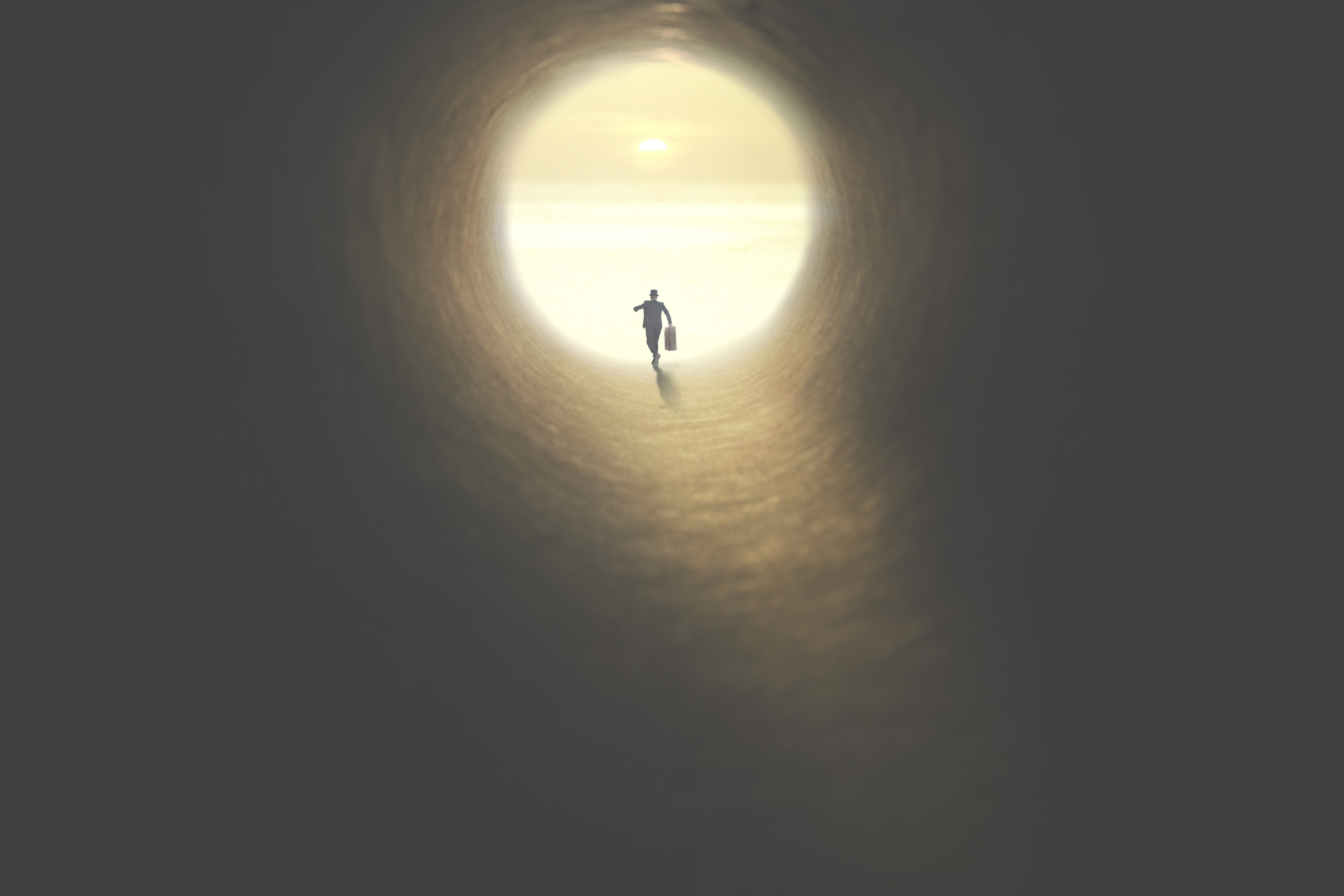
Life can sometimes feel like a dark and endless tunnel with only a glimmer of light barely shining at the end of it. We all know that we’re all going to die one day, but we live on the best we can in spite of this grueling knowledge, and it can get quite easy to fall into despair and wonder what this life is all for. Sometimes it’s worth pondering so we can make some decisions and move our lives in a proper direction while other times it can be paralyzing to even think of it so a lot of us spend our time trying to escape it.

Art can be one of the best escapes we can have to get our minds off this harsh reality of existence. Through art, we get a window into a different reality that fascinates us whether it’s an out of this world fantasy or one that closely resembles our contemporary world but with a sense of heightened drama. This escape can result in relaxation when the art we view can fill us with hope, or at the very least distract us from the humdrum of day to day life.

But what about the dark and cynical artwork out there? Perhaps this art isn’t what you retreat into, rather it’s a safe way to confront existence with its problems exaggerated and dramatized so it can open our eyes to the dangers and darkness of the world. And perhaps its in this staring back at the abyss that we gain the courage to press on despite of how uncomfortable it may be to watch something like Black Mirror or to read a Stephen King horror novel.

Retreating into art for either hope for life, or confrontation with it, can help enrich our lives by providing us positive possibilities and inoculation from its proclivity to give us tragedy and heartbreak.

Renewal From Art

You can experience a hopeful story to fill yourself with hope where you may be lacking or to strengthen the hope you already have. You can also experience a dark story to feel empathized with for your troubles or to simply contrast the joy you feel in your life. Any way you slice it, consuming any piece of art should leave you feeling renewed for life. You either have hope for life, or at least feel less alone knowing that the darkness within you isn’t yours alone. That it’s shared by others who have created something that conveys it.

But if a specific medium or genre of art no longer gives you that sense of renewal, it might be a sign that you need a palate cleanser. Personally for me, for the past decade or so, I’ve been really into heartfelt and schmaltzy dramas after quite a stint with dark and psychological thrillers. It’s indicative of where I was mentally and emotionally throughout my twenties. First, I needed the dark and twisted stuff to wrestle with my own dark and twisted thoughts, but I grew tired of contending with darkness all the time. But then at some point, I decided I wanted to develop more hope and love in my life and personal relationships, so I turned to watching and reading more heartfelt stories to have them model for me what sincerity with others could look like.

This past decade has been quite the thrill ride in terms of my personal growth, and it’s hard to say which came first; the chicken or the egg? Did I turn a new leaf and that’s what made me gravitate toward the schmaltzy stuff so I can relate to something more? Or did the schmaltzy stuff influence me in wanting to improve my emotional health and mindset? Perhaps they worked in tandem with each other, feeding into each other in this positive feedback loop that has resulted in me feeling a huge sense of renewal.

Revival By Art

Getting into a new genre can be quite rejuvenating as the past decade has been for me with the heartfelt emotional dramas. They have inspired me to be more vulnerable and sentimental toward the people I love and it has resulted in a much more fulfilling life than I could ever imagine. It has taught me that life imitating art doesn’t always have to be in the worst ways possible, and that despite being exaggerated and over dramatic, sometimes we do need vulnerable and uncomfortable conversations with our loved ones akin to how they might have it out on an episode of This is Us. For those not in the know, it was a prime time family drama infamous for making people cry and feel things in every episode, I highly suggest you check it out.

It’s actually in my rewatching of all six seasons of This is Us that made me think about this whole notion of Artistic Palate Cleansing. After a decade of deeply emotional stories for me to consume and have them influence me the way that they did, watching This is Us with all of its emotional intensity made me realize something; over the years I’ve had less and less need for art to punch me in the soul emotionally and force me to cry out a lot of my unexpressed grief with life and myself.

As I’ve grown from my twenties and am currently passing my mid-thirties now, I am grateful to be able to say how much of a better place I am in my life now thanks to loads and loads of therapy and support last year. Because of this, the schmaltzy stuff was no longer drawing anything out of me, and I noticed this as I was nearing the end of rewatching This is Us. The poignant moments in that show were still enjoyable to watch, but while a lot of them still hit pretty hard I found myself coming to the decision that I gotta change it up.

And so, as of late, I’ve kind of strayed away from consuming art that revolves around interpersonal drama and got into martial arts films and pro-wrestling. What a huge change up, right? Well that’s the point. I feel like I don’t need to feel anything too strongly from art and that I can just relax and enjoy it, simplistic as these artforms may be. Martial arts films and wrestling have their own level of depth that people don’t notice, but they are still fundamentally simple in nature.

This massive shift in genre preferences has rejuvenated my soul the same way it did a decade ago, or maybe even more so since this deep dive into the more touchy feely emotional and think pieces have increased my appreciation for all forms of art. From the dark and gritty, to the hopeful and emotional, and finally back to what my inner child loves in regards to stylized violence, these fluxuations in tastes have made my experiencing of art all the more meaningful whenever I’ve switched it up.


Roads to Art

There are countless of roads towards experiencing art that suits your tastes and even more so that can expand your tastes. Whatever you decide you’ll know in your heart what is right for you. Get out of your comfort zone and read a book or watch a show you would normally avoid. If not to get into it yourself, to at least see why other people may like it. Even if you fail to grasp what makes something entertaining, try to set aside your ego and not sneer at it and dismiss it as a waste of time. Instead, pride yourself for having opened your mind enough to try something new even if it’s not to your liking.

In the final analysis, the way we choose to experience art is how we choose to confront our own mortality. When an artist creates something, it is their way of immortalizing themselves by leaving something behind before they pass from our physical plane to the next. In experiencing their creations, we too can immortalize ourselves by being born into and dying out of preferences so that the process of acceptance and letting go can become a bit easier with time.

It’s something I’ve experienced time and time again with not only shifts in preferences, but in watching and reading my favourite stories come to an end, either in satisfying ways or dissatisfying ways. Hell, I’d even argue anything with an abrupt ending has helped me come to terms with the end of life because if a show gets cancelled before it gets a chance to wrap itself up, it’s kind of like the lives of some unfortunate souls that pass too soon. They were all in the middle of their lives still with much left to do and say, and like our favourite TV characters that belong to a show that gets cancelled before it gets a chance at having a proper finale, we are stuck with wondering what could have been or simply accepting that although the ride is over, at least the memories remain.

P-ing Over Productivity

We live in a society where our worth is tied heavily to our sense of productivity. If you’re not doing enough, then you are not enough, by definition. You can feel this any time you run into someone you haven’t seen in a while. Almost everybody’s go to question is work related. Such versions of these questions include:

“Where do you work now?”

“How’s that job of yours, you still there?”

“Are you working?”

It’s as if we’ve become human doings as opposed to human beings. We forgot what it was like to just be a human without needing our jobs to define our character. It’s funny too because the word work carried a double meaning. On the surface it pertains to working at a job. But then if you dig a little deeper, it also carries the implicit question of are you functioning?

Today we’re going to delve into The Six P’s of Productivity so that we are no longer squashed by the expectation to be and appear productive in the eyes of our peers, and learn how to approach life in a more meaningful way that is less dependent on how you look to the world, and more focused on how you feel about your personal experience.

  1. Presence
  2. Practice
  3. Progress
  4. Pacing
  5. Purpose
  6. Patience

PRESENCE

What I love about writing is that it forces me to focus on one thought at a time. My ADHD brain usually races from one to another in a seemingly nonrelated manner. What writing affords me is the ability to slow down my thought process and to get a visual sense of how my thoughts are either connected or disjointed.

Within the process of writing, I try my best to not think about anything else but the topic at hand whether it’s my personal journal, my novel, or this very blog post right here. As soon as I let my mind distract me and tempt me toward doing something else, then I will lose that chance to express my feelings and ideas in a coherent manner. Either I will give up on writing or end up writing something incoherent and all over the place.

This is why it’s importance to eliminate distractions as best as possible and train your mind to think only about the task at hand. Any thoughts that are irrelevant to what you’re doing, you can make a quick mental note to take action on later, but if you’ve sat down and decided to write, paint, or compose a piece of music, then that is all you should physically be doing and that is all you should be thinking about.

And all that takes…

PRACTICE

Practice makes perfect, they say, but what they don’t say is how perfectionism prevents practice. What often prevents us from getting things done is a feeling of incompetence and the lack of confidence which I’ve touched upon in 3 Ways Perfection is the Ultimate Procrastination, and the only way to gain any sense of competence is practice.

Of course you’re gonna suck at something at the beginning. As I always say, much thanks to a quote from a Street Fighter graphic novel ala, “a master was once an awkward novice.” You need to get over yourself and realize that it’s not about how you appear to others or even yourself in your mind, rather it’s about mastering a craft and doing what it takes to become a said master.

And all that takes practice. Consistent, messy, and grueling practice. Read the books and watch the videos you need to learn about music composition all you want, and you can even daydream about being a famous musician all you want. But none of that will really amount to anything if you don’t practice your instrument and just play the damn thing to eventually achieve some sense of…

PROGRESS

Being present when you practice anything, you are bound to achieve some level of progress. No matter how little your progress is, it is important to take stock of it, especially if you’re feeling stuck. One way to do this is to write in a Progress Journal and keep track of all the things you get better at in your given field.

This idea of a Progress Journal is so important that I wrote about it a second time many years since the initial post, but ADHD interconnectivity of my blog aside, even mentioning how much I wrote about progress so many times speaks on the importance of it because from each successive post about progress marks different milestones in my own personal journey.

In your own personal journey, progress is going to be something very close and intimate to you in a way that no one else will ever truly understand, unless you have a good mentor keeping track of your progress along with you from an objective and an emotionally detached point of view. You kind of need both your personal connection to your progress and your mentor’s detached point of view to it in order to strike a balance toward proper…

PACING

Whenever you start a new job or hobby, it is important to also pace yourself so you don’t burn out. As an ADHDer, I’ve had so many hyper-focuses that almost everything I love doing creates a tinge of fear in me because I remember all the times I would sacrifice eating, sleeping, and even relationships just so I can continue enjoying the dopamine rush of doing something new and exciting.

So while you do want to become present in what you do, practice it consistently, and track your progress, you also want to pace yourself so you don’t burn out as fast as I have many times. For instance, when I wrote the first draft of It Starts at Home, back when it was called Dear Stupid Diary, I wrote about 6000 words a day because I couldn’t stop myself. I got addicted to finally becoming present to the point that my entire sense of time had gone irrelevant.

It’s very seductive when we find something we really love to do that it can easily consume all of our time and energy to the point of costing other aspects of our lives. So don’t forget to take your appropriate breaks and to pace yourself accordingly so that you save your energy and excitement for another day and sustain that consistency over a longer period of time. It is much better to do a little each day for a long period of time than it is to everything all at once in one day, only to risk losing all that initial euphoria and end up doing nothing the next.

Pacing becomes really easy when you’ve discovered your…

PURPOSE

Why you do what you do is a deeply intimate thing only you and a handful people will ever truly understand. Whenever I feel stuck on any creative project, I always ask myself, “why am I even doing this again?” If it’s because I want to appear productive and impress people, or even prove to myself that I’m not as lazy as my ADHD forces me to be sometimes, then I’ve already lost.

However, when I remember that it’s because I love creating things and enjoy the presence it affords me, then I am better equipped to keep at that task at hand. This blog post itself has been a challenge because the first draft was all about my work experience, which is ironic because of how I opened this post about not tying our self worth and identities to what we do for work.

But upon this rewrite, I’ve regained a sense of my purpose for writing Your Write to Live blog posts: to share my own personal experiences in a way that helps others overcome their own sense of dread and resistance toward living their best possible lives. Essentially, much like Marcus Aurelius’s Meditations, these blog posts are reminders to myself on how to think and act better in my life. But unlike Marcus, I’m intentionally sharing my thoughts with you in the hopes that they can also provide relief and assistance to anyone else beyond myself.

But whether I help anyone or not, or even start to follow my own advice, we all need a little…

PATIENCE

It’s easy to get impatient when we can see who we can be if we just tried hard enough. A lot of people’s negative emotion is due to not fulfilling their potential that they often see looming in the distance. It becomes a bit of a judge and executioner of our current selves because we’re not who we could be. And while it is helpful to know that you can be better than you are now, thus driving yourself toward personal development, it is also important to be patient with yourself.

Sometimes we’ll stumble and fall along the way, and that’s all part of life. Maybe you can’t be present enough to practice consistently. Maybe you still feel like you haven’t made progress no matter how much you try to take stock of your progress. Maybe you pace yourself poorly and lose sight of your purpose.

When all these things fail, always remember to be patient with yourself. There’s only so much progress one can make at a given time. We all wish we had all the time in the world to do all the things we want and achieve what we want, but life often gets in the way with emergencies, social obligations, and random illnesses and other setbacks that prevent us from moving forward.

Be patient with yourself and with life having trust and faith that whatever holds you back is only temporary. Nothing in life is permanent, only short term or long term. So be patient for the storm to roll by and maybe you’ll find yourself in a place of calm once again, ready to excel at what you love once more.

Therapeutic Journaling Part 10: The Gratitude Journal

One of the most overlooked, but also one of the most powerful kinds of journals you can write, is the Gratitude Journal. All too often we’ll journal out our problems and hopes for the future that we forget to take stock of what we currently have: The Present Moment.

It’s all we ever have and no matter how much loss we’ve suffered in the past and how much more we’ve got to gain in the future, so long as we’re simply breathing, we have a lot to be thankful for. Maybe you’re not where you want to be in life and maybe you’re suffering a crisis. The mere fact that you get to live and be given the opportunity to learn and grow from hardship should be appreciated.

It’s a strange concept, to be thankful for even hardship. But if you really think about it, without sadness and hardship, we would not have much appreciation for happiness and the good times in our lives. There’d be no contrast. And in the business of contrasting, instead of journaling out your problems all the time, take a moment to be grateful and acknowledge where you’re at.

“He who cannot be contented with what he has will not be contented with what he wants.” – Socrates

It was true over 2000 years ago and it’s still true to this day. Practicing gratitude can help reframe your mind toward abundance rather than always focusing on scarcity. We have evolved to focus on scarcity because human survival was much harder before than it is now, so we’ve still got a lot of leftover monkey brain residing within us. Not to say it’s entirely useless because starvation and poverty are real problems, but I think it’s safe to say that if you can afford the internet connection in order to read this post, there’s a high chance that you’re living a comfortable life, if not a luxurious one.

Yet that’s the problem, right?

Comfortability.

We work so hard to get to the point of comfortability because being challenged is difficult, we just wanna laze around and watch Netflix or play video games all day because they’re the most fun and easiest things to do. But then we tend to grow stagnant when we live a little too comfortably. So just as we need challenges to help us grow, we also need ample rest so we have the energy to tackle the challenges of life.

It’s a balancing act that we will never perfect, but will definitely try our entire lives to employ. You want to be journaling your problems out for the catharsis and possible problem solving that can come with it. And you also want to be writing about the things you’ve achieved thus far and be grateful for what you have in life, even if it may seem very little.

Harkening back to the Socrates quote, sometimes we get so busy chasing things that we think will make us happy that we somehow forget how to just be happy. We think that next relationship, that new job, or that new toy is what’s gonna make us happy, and maybe we get one or all of those things and then it’s like “so what now?”

That’s the tricky thing with life.

It’s good to have goals to strive for so that each day you live is filled with some sense of purpose and direction. But as that old cliché goes, “life is a journey, not a destination.” It’s cliché because it’s true. If you’re not moving toward an aim you are then aimless and begin to feel the weight of existential dread falling upon you.

So you work, work, and work, and you finally achieve your goal, and then you’re confronted with a whole new problem: “what’s next?”

Achieving one goal only opens you up to having a whole new set of problems you did not think possible, and since you have much more life left to live, then the process repeats. Until the very end of your days there’s always gonna be one more mountain to climb because it’s just what we do as human beings. We inherently do not feel like we are or have enough and so we strive to fill ourselves with more and more experiences and possessions—all of which are not bad things in and of themselves, but none of them really mean anything unless we take the time to be grateful for them.

If you have nothing pertinent to journal about, no issues to solve, then take a moment to write a Gratitude Journal because we could all use a little respite here and there. Give thanks to the people you love, the art that you’ve consumed, and even thank yourself for showing up for your daily practice. Life is very short and we tend to go from one thing to the next in a heartbeat, so giving ourselves a moment to breathe and feel that heartbeat, even for just a fraction of eternity, we are reminded that it is Your Write to Live.

Therapeutic Journaling Part 9: Improving Your Self Talk

What all journaling comes down to is improving how you talk to yourself. It’s definitely what I’ve learned from my Trifecta of Tribulations a few years ago. We all have a tendency to narrate and frame our lives in a certain way that can cause us suffering. A lot of it has to do with unmet needs, unmet expectations, and just a general sense of pressure we put on ourselves to be a certain way and experience life a certain way, instead of just letting ourselves be.

With journaling, you can write down the ways in which you behave, how you think and feel about them, and then decide on a course of action on how to proceed knowing what you know. Take stock of who and how you are throughout the day and compare it to how you would like to be better in the future, but also be kind to yourself if you don’t live up to these new ideals you set for yourself.

That’s the important thing about goal setting: aim high, but don’t break your neck.

We all know of a multitude of ways in which we can operate better in the world at large, but we often feel disappointed in ourselves whenever we don’t live up to that standard. This is where journaling can be helpful in keeping track of your past, present, and future trajectory. By observing yourself as objectively as possible, and maybe even seeing yourself as a protagonist to your own novel, you get to write yourself out the way you so please.

Do you want to be the protagonist or the antagonist of your own story?

Sometimes we’re both, such is the human condition. We are walking talking contradictions claiming to have one value and then betraying them seemingly in the next heartbeat. Then comes the shame and the guilt around it. Why? Because we all have a potential future self that is actually judging us in the present. We know we could be better, but often make excuses as to why we’re not living up to that potential.

It’s one thing to have that inner commentary constantly justifying why we squander our time away, but it’s a whole other thing to write that down and face the painful reality that that’s what you actually think all day. When you read back on your journal entries as if it’s a good friend reporting to you the contents of their mind, then it becomes excruciatingly clear how much work you have left on improving yourself.

Whether you write an Internal Family Systems Journal or not, a journal is essentially a conversation you have about yourself, with yourself, and to yourself. So much of the quality of our lives depends on the quality of our thoughts because the quality of our thoughts affect our words, and in turn our words become our actions. To keep track of all these things is to develop the self awareness required to move forward in life.

That’s all life really is in the end, an ever going journey to understand ourselves and operate better day by day until our final breath. The learning never ends until our lives do.

And that’s another thing journaling can help you discover. That you are constantly faced with your own mortality and so much of it has been squandered on self defeating thoughts that hold you back from moving forward in life.

It’s perfectly fine if you fill an entire notebook full of yourself doubt for the catharsis, but what do you once you get that out of your head and onto the page? Well, you do the excruciating practice of actually reading back to yourself what you’ve written and imagine your journal self as someone you care deeply about. What would you want to tell them in counter or support to what they’ve said?

I know in my experience I could be quite harsh on myself to the point of causing my own depression for several days. I used to beat myself up for making mistakes or not living up to my potential to the point of not letting myself do any writing or not letting myself reach out to friends or family to talk to. I was too ashamed of myself to think I was worth all that trouble for people to care about, let alone believe my writing had any merit beyond mere self expression.

Self expression is key, though.

That’s the most important thing about journaling that people need to understand. It has nothing to do with being a good or bad writer or if it makes any sense. It’s all about getting to express yourself as freely as you want because the page is the safest place on the planet.

Anne Frank said it best when she said, “paper is more patience than people.”

The page won’t judge you or shame you for thinking what you think.

The page won’t challenge you on your thoughts.

That’s all completely up to you to do. You can start off journaling with the express purpose of letting your darkest, deepest secrets and desires onto the page, but in the end it’s up to you whether you want to do something about any of that or not. My opinion is that you should, but my opinion shouldn’t matter to you when you’ve got your own intricate inner world that I will never understand, and you’ll have your own reasons for resisting the challenge that journal brings forth. Let alone journaling at all.

But once again, in my experience, I’ve become acutely aware of how damaging myself talk has been, calling myself names, making myself feel guilty and ashamed about certain things I do or say, and giving myself an overall lifestyle of dread and misery.

After several years of journaling and about half a year of therapy, though, I’m starting to see how much time has been wasted on doubting myself and not believing in myself enough. Trusting myself is an even bigger point of contention, but I’m getting there. I’m finally at a place where I can get depressed and tired of life, but simply retreat to myself and recover instead of telling myself how much of a failure I am and unloading my negativity onto others.

If I have a trusted friend or family to talk to a certain thing about. Hell, that’s what my therapist is for when I want an even deeper dive for help beyond unconditional empathy. She will challenge my thoughts and beliefs, pose questions about them, and I am left speechless and mindless a lot of times because it stops the usual noise that goes on in my head.

With journaling and therapy, the goal is to tackle your thoughts and feelings to the point where you really do need to take a moment to stop, breathe, and think before you answer. Whenever your mind stills itself and stops the usual chatter, that’s when you know you’ve hit some big and need to take your time to figure it out.

And in the end you will learn exactly how you need to approach yourself on a daily basis. The kind of empathy and compassion you know you deserve, giving yourself the kind of self talk you need to survive the throes of life. This doesn’t mean delude yourself into thinking everything is fine when things are going to hell, but it does mean taking ownership for the ways in which you can influence the circumstances of your life to the best of your ability.

Improving our self talk is important because we get so used to hearing the same thought patterns over and over again, and we start to believe them. We don’t even know where so many of our thoughts and beliefs come from, whether we’ve come to these conclusions rationally, emotionally, or simply by default. We’ve given our power away by getting influenced by our peers, family, or society, but in the end we are the ones, at the individual level, who are ultimately responsible for the way we think, feel, and act in the world at large.

Therapy, coupled with journaling, is how reclaim that power.