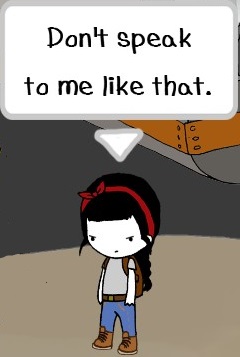
There have been a few offensive words that I’ve eliminated from my vocabulary that dehumanize certain people. Adding to that subtraction, I’m also going to stop using the word “childish.” I don’t think I’ve ever said it that much, but either way, I want to take a stand against saying such a word.
It’s demeaning to children when you label somebody’s behaviour as “childish,” because you create the association that all negative behaviours are synonomous with being a child. Whether it’s immaturity, abrasiveness, being annoying, or any other behaviours people deem as “childish,” we all know that adults are prone to these behaviours as well.
If the beginning of wisdom is to call things by their proper name, then it is unwise to re-label certain behaviours as “childish.”
It’s an insult to children because I’ve met children who have exuded infinitely more maturity and respectfulness than some adults. Any time I’ve felt annoyed by a child, all it took was one look at how their parents act and/or treat them in order to spot where that shitty behaviour in the child came from.
Children are sponges. They replicate the behaviour of those around them for better or for worse, and in this sick fucking society, it’s usually for the worse. A lot of adults out there are really just damaged oversized children who are unwilling to face the truth about their childhoods, thus creating the possibility of undoing the damage.
The truth that they were robbed of their happiness, autonomy, and most of all freedom of choice. The truth that when they were children, any time they behaved in a way that inconvenienced the adults in their lives, they were labelled as being “childish.” And by accepting that as the truth about themselves, they end up believing that children in general, by their very nature, are just annoying little inconveniences.
Based on their negative views on children, and their use of the term “childish,” it makes it very easy for me to see why people “grow up” believing in the fallacy of “childishness.” And it’s for these reasons, and many more, that I’m going to stop using the word childish in order contribute to stopping the prejiduce society has on children.
Children are the future, else without them, the human race will cease to continue. And if they are the future, and you want to see a better world in the future, stop ascribing negative attributes to children, and comparing other people’s inconvenient behaviours as “childish.”
Please forgive me, I’m very new to this whole “being a decent human being” thing. Really, I am. After a decade of intensive self work, I am still prone to lapsing from time to time, and thus will do or say things that are out of line.
I’m not trying to excuse myself from being offensive or sometimes outright shitty, but old habits die hard, and some ingrained habits of mine include saying some outrageous and shocking things. This also includes, but is not limited to being an asshole and insulting someone directly or indirectly.
For instance, when my first writing group criticized a sex scene in my adult contemporary novel (2nd novel I wrote called Me, My Self and Who Am I?)–a fellow writer told me, “they say write what you know, so maybe you should get some experience before you write a sex scene.”
And I replied, “experience? Wanna come over and smell my sheets?”
My college professor placed an arm down on her desk and said, “this is the line,” and then crossed her other arm over it saying “and this is Marlon.”
Everybody laughed, and I got off from it. Yes, pun intended.
I get it, some situations and certain people are open to it, but overall, it may or may not be appropriate in others. I’m left wondering if this part of me is worth keeping alive. It’s been a big part of me and one of the ways I’ve humoured people.
Keeping it or ditching it…that’s something I still need to figure out, but ultimately, I will commit to learning how to put on a bit of a filter for myself around those who may not be able to stomach it or just may be more mature than myself.
I think the reason why I make dark, cynical, and explicit jokes is because being plain ol’ me never got me that much attention. I want to grab at attention by saying shit that shocks and disorients people. It’s fun to see what limits and boundaries I can break sometimes and I wonder to what degree that kind of attention is even healthy for myself or others.
I don’t know…
I constantly wonder if trying to be a better person might include lessening or completely removing such behaviour because I do feel an immense joy in simply being kind, generous, and empathetic, instead of acting like a character from some adult sitcom.
(You know, that kind of character you love watching offend people and laugh your ass at, but would never want to associate with in real life, ie. Sheldon Cooper and Barney Stinson)
Being a decent human being is hard work, but hard work is often associated with having a high reward, and I think it’s even more true than with anything else. You can work hard at running a business, doing your job, or studying for school etc., but I think the hardest work anyone can do and have the highest reward lies in being a decent human being.
Not only are they in high demand in this world, for they/we are very rare, but really do make the world a much better place to have empathetic and understanding people. People who can own up to their actions, self improve, help guide others into similar behaviour (but in their flavour), and overall make the world a little less cruel and disgusting one interaction at a time.
So hey, I’m not perfect. Not yet anyway. And as I write this, one of my favourite songs has popped up on my iTunes by Kacey Musgraves. After everything is all said and done, having done my best to be the most authentic version of myself, “you can’t be everybody’s cup of tea.”
This is me embracing the duality of being genuine and douchey all at once. Take it or leave it.
I used to think that Young Adult novels were lame, because I assumed that you weren’t allowed to cuss or discuss dark and gritty topics. Of course, that’s what happens when you assume things; you make an ass out of u and me. Now that I’ve actually read a ton of YA novels, I am hooked!
Although he writes mature adult novels–full of excessive vulgarity, disgusting details, and overtones darker than the night itself–I got into YA thanks to him. Most of his novels do feature adult characters getting into adult situations, most of which involve some awesome plot twists (Fight Club, Invisible Monsters, Snuff), but there’s one book of his that features a fat 12-year-old dead girl in Hell.
Damned follows the story of Madison “Maddie” Spencer, the daughter of two Hollywood big shots who are constantly too stoned out of their minds to give her any genuine attention or affection. She apparently dies of a mairjuana overdose, and is sent to Hell where she meets a group of other damned souls who become her posse of misfists.
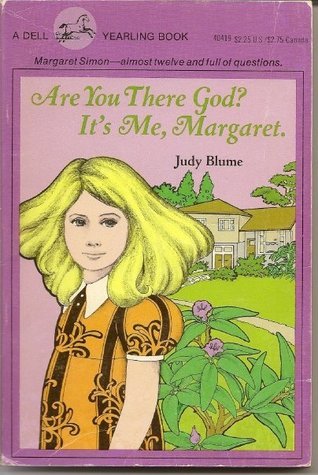
The book is often described as The Breakfast Club meets Are You There God? It’s Me, Margaret in Hell because each chapter begins with “Are You There, Satan? It’s Me, Madison,” and she shares the coming of age struggle Margaret faces in Judy Blume’s book.
Now, I’ve watched The Breakfast Club several times in my life and have always connected with the universal themes of the teenage struggle, but never once have I ever read a Judy Blume book. Why would I anyway? Aren’t her books written for little girls?
Apparently not!
Don’t get me wrong, I love Damned, but the sequel Doomed, felt a little overwritten compared to its predecessor. The narrative voice felt too intellectual and masculine to be that of a 12-year-old girl’s, but I read it anyway because I highly enjoyed the overall adventure of Maddie’s goal to confront Satan and find out why she had to die early and be damned to eternal torture.
(Chuck Palahniuk’s idea of eternal torture includes walking on hills of toenail clippings, passing by rivers of pimple puss and rejected human fluids, and my personal favourite; working at a telemarketing office to troll the people still alive on Earth)
So I got curious about Are You There, God? It’s Me, Margaret just so I can see how much of it actually inspired, or at least reflected the content in Damned. Aside from the chapter openings and having a 12-year-old protagonist, there was obviously a stark contrast that astounded me.
Gone were the supernatural elements, gross descriptions, vulgarity, drugs, and violence etc.
What I got instead was a story about a middle grader feeling left out because she’s the only girl in her class who hasn’t gotten her period yet. That made for a great a surface theme–since I’ve never considered what the female puberty experience was like, though it was a welcomed surprise–but what really captivated me about the book was Margaret’s struggle with her religious beliefs.
It surprised me immensely when I started noticing the bigger picture. Margaret was raised without religious affiliation; her father is Jewish and her mother is Christian–but pushed neither religion on her–and so Margaret’s internal struggle, on top of her desire to get her first period, was trying to find religious singularity.
[spoiler]There was this epic scene where her grandmother and her parents argue about what religion she should conform to, but she gets so frustrated and cries out about how no one even is stopping to consider what she wants to believe in.[/spoiler]
Although I prefer to read more mature YA novels with older characters who do cuss and discuss dark topics, Judy Blume single handedly diminished my assumptions about YA. Now I have absolute respect for it because it’s now that I understand the appeal to it.
Being a teenager is an intense time in anyone’s life because it’s when we begin to truly begin to question our identities as individuals separate from culture. Our hormones and emotions are the most sensitive and although it’s such a small amount of time in our overall lives, they are the most intense, bringing with it the growing pains that shape us. The teenage experience is universal for anyone who has survived it.
In the spirit of delving into backstory after my 3 post streak with the Crafting a Character Series, I would like to share with you a personal story of my own.
When I was 10 years old, I felt so badass for staying up until 3AM to catch a cartoon that looked like it was made with construction paper by a group of kindergarteners. But the looks were completely deceiving as it would feature some of the most potty mouthed and outrageous content I have ever seen in my life. That show was South Park, and I loved it for its simplistic art style.
I also used to love drawing as a kid, but could never draw anything spectacular or anything close to replicating my favourite cartoon characters. But man, one day I drew a bunch of my own original South Park characters and felt so proud that I could finally replicate something I liked!
I wanted to show this drawing to someone who I used to love and whose opinion I used to value. They will remain as nameless as they are heartless, but basically, this person took a quick glance at my drawings–not a single glance at me–and then said nothing at all before they started using the paper to catch their toenail clippings.
To this day, I’m filled with rage when I recall this instance in my life. The time, energy, and effort I put into this character palette page was wasted to catch the waste of this disgusting individual.
What this communicated to me was that my time, energy, and effort was a waste because no one will give a shit about what I produce. This person was my world and their negligence stained my perception of the actual world at large. It was a bomb set in my brain, ready to detonate in later years, giving me a hard time to commit to creative endeavours.
I’ve always known that I was a skilled writer, and that could I continue to improve daily, but for a long time, I used to require the external validation of others to assure me that my work was worth my time at all. As for drawing, I gave it up in favour of writing and I often wonder if I stopped drawing completely because of this incident–or even without it, I would have naturally made the trade off.
Nonetheless, I’ve been hurt by this careless person and no longer love them, nor do I care about their opinion anymore. At all. Having explored this issue in my history has afforded me the comfort in knowing that the joy I have when I create–a song, a novel, a blog post–belongs to me and only me.
Sure it matters if people like what I produce, but it doesn’t matter as much as how much I appreciate my own time, energy, and creativity.
If anyone ends up liking it, I’m glad that it resonates with them. If they don’t, that’s fine. I’m always open for criticism and improvement, but after processing this aspect of my psyche, I can now tell the difference between whose criticism matters, and whose criticism is just a replication of what was done unto me as a child. At which point, I simply dismiss it as waste. Waste that belongs nowhere near my work.
Keep your waste to yourself because my work will shine as a repellent to your cruelty.
We’ve taken a look at how our present lives are defined by our pasts, and to come full circle, we will delve into breaking the shackles of history and achieving freedom in the future.
As always, characters are driven by Goal, Motivation, and Conflict. All three keys play an important part into unlocking the potential that resides in all of us, fictional and real people alike. Here is how GMC is considered in a character profile:
The First Day of the Rest of Your Life
Main Desire:
Desires drive all action, purpose, and intention. Having a clear understanding of your desires is fundamental to understanding what steps you need to take toward leading a fulfilling life, as well as providing value to the rest of the world.
Even if your initial desire is what propels you into action, the desire may change over time or evolve to something else based on how much you want to achieve. Sometimes you do get what you want and realize you desire so much more than you ever realized.
Such is the case for Morgan from #16Things I Thought Were True by Janet Gurtler. After her mother suffers a heart attack, Morgan gathers the courage and tenacity to ask about the biological father that was absent throughout her childhood.
At the start of the story, Morgan sets out to gain 5000 Twitter followers, while having 0 friends in the physical world because she feels alienated after having an embarassing video of her dancing in boy’s underwear going viral.
Due to certain circumstances, Morgan is forced to allow two of her co-workers, Adam and Amy, to accompany her on a road trip to seek out her biological father.
Although confronting him is her initial desire (as well as amassing a ton of Twitter followers), Morgan develops a bond with Adam and Amy; two co-workers she had barely liked or understood at a personal level before their heart warming–and sometimes gut wrenching–road trip together. Her true desire all along had been garnering connectivity, and it didn’t have to come from her long lost father.
What are your main desires? Have you achieved them only to realize there was something more meaningful out there? What steps are you taking today in order to achieve these goals in the future?
Major Strength:
Another important aspect of characterization is having strengths that contrast a character’s vulnerabilities. Many protagonists are victims of circumstance which drives us to sympathize with them, but in order for us to even want to root for them, they need to have major strengths that can help make them more appealing.
In the hit series How I Met Your Mother, Ted Mosby goes on a seemingly unending search for his soul mate. He starts off as a desperate lovelorn who just can’t catch a break because his desire often becomes a part of his major flaws. Having this desire starts off as a way to avoid himself and have him develop the mentality that he is nothing without somebody to love.
However, throughout the course of this dramatic rom-com, we learn that he has a big heart and he’s deeply invested in his friends. The love that he provides for them transforms into love for himself and discovering his own value as an individual before meeting The Mother/Tracy McConnell.
Ted Mosby’s strength is his ability to love and his hopeful spirit, but it took transmuting it for himself and for what he already had in order to achieve his goal; meeting a woman who more or less resembles a combination of all his friends.
What are your major strengths? How do they play a role in helping you achieve your desires?
Perpetual Passion and Main Mission:
The mark of a strong character is intertwining their personal desires with their major strength in order to contribute something to the world at large. People who want to make a difference in the world, or at least in their immediate world (interpersonal relationships), are always challenged by people who want to keep things the same and not improve the state of the world.
Having a mission and commiting to it is admirable because it’s the ultimate test of character to offer your gift to the world, despite of its initial reluctance to accept it–when ironically, the world may so desperately be in need of your gift.
Batman, despite all his violent brutality serves as a good example for a character rooted in their principles. He’s committed to fighting injustice, but will never ever kill criminals.
He believes anybody can be redeemed and sees the possible good in others all despite of the hatred he has for his parents’ murderer (which changes depending on which reiteration of the Batman story you read, watch, or play).
I could just as easily use a character who embodies the purist level of virtue, but I think Batman serves as the best example because he’s still fundamentally flawed being so addicted to enacting violence, and only stopping short of actual murder. It’s debatable whether or not he creates more villains than he puts away, but one thing is for sure: he is committed to his perpetual passion for fighting crime as his main mission.
What are you passionate about? What’s your main mission? What mark do you want to leave in the world and why do you think it’s important?

 There have been a few offensive words that I’ve eliminated from my vocabulary that dehumanize certain people. Adding to that subtraction, I’m also going to stop using the word “childish.” I don’t think I’ve ever said it that much, but either way, I want to take a stand against saying such a word.

 What I got instead was a story about a middle grader feeling left out because she’s the only girl in her class who hasn’t gotten her period yet. That made for a great a surface theme–since I’ve never considered what the female puberty experience was like, though it was a welcomed surprise–but what really captivated me about the book was Margaret’s struggle with her religious beliefs.




 Your Write to Live