Crafting a Character Part 3: A Better Tomorrow

photocredit: http://www.gorampup.com

We’ve taken a look at how our present lives are defined by our pasts, and to come full circle, we will delve into breaking the shackles of history and achieving freedom in the future.

As always, characters are driven by Goal, Motivation, and Conflict. All three keys play an important part into unlocking the potential that resides in all of us, fictional and real people alike. Here is how GMC is considered in a character profile:

The First Day of the Rest of Your Life

Main Desire: 

Desires drive all action, purpose, and intention. Having a clear understanding of your desires is fundamental to understanding what steps you need to take toward leading a fulfilling life, as well as providing value to the rest of the world.

Even if your initial desire is what propels you into action, the desire may change over time or evolve to something else based on how much you want to achieve. Sometimes you do get what you want and realize you desire so much more than you ever realized.

#16thingsithoughtweretrueSuch is the case for Morgan from #16Things I Thought Were True by Janet Gurtler. After her mother suffers a heart attack, Morgan gathers the courage and tenacity to ask about the biological father that was absent throughout her childhood.

At the start of the story, Morgan sets out to gain 5000 Twitter followers, while having 0 friends in the physical world because she feels alienated after having an embarassing video of her dancing in boy’s underwear going viral.

Due to certain circumstances, Morgan is forced to allow two of her co-workers, Adam and Amy, to accompany her on a road trip to seek out her biological father.

Although confronting him is her initial desire (as well as amassing a ton of Twitter followers), Morgan develops a bond with Adam and Amy; two co-workers she had barely liked or understood at a personal level before their heart warming–and sometimes gut wrenching–road trip together. Her true desire all along had been garnering connectivity, and it didn’t have to come from her long lost father.

What are your main desires? Have you achieved them only to realize there was something more meaningful out there? What steps are you taking today in order to achieve these goals in the future?

Major Strength:

Another important aspect of characterization is having strengths that contrast a character’s vulnerabilities. Many protagonists are victims of circumstance which drives us to sympathize with them, but in order for us to even want to root for them, they need to have major strengths that can help make them more appealing.

photocredit: http://images.idiva.com/

In the hit series How I Met Your Mother, Ted Mosby goes on a seemingly unending search for his soul mate. He starts off as a desperate lovelorn who just can’t catch a break because his desire often becomes a part of his major flaws.  Having this desire starts off as a way to avoid himself and have him develop the mentality that he is nothing without somebody to love.

However, throughout the course of this dramatic rom-com, we learn that he has a big heart and he’s deeply invested in his friends. The love that he provides for them transforms into love for himself and discovering his own value as an individual before meeting The Mother/Tracy McConnell.

Ted Mosby’s strength is his ability to love and his hopeful spirit, but it took transmuting it for himself and for what he already had in order to achieve his goal; meeting a woman who more or less resembles a combination of all his friends.

What are your major strengths? How do they play a role in helping you achieve your desires? 

Perpetual Passion and Main Mission:

The mark of a strong character is intertwining their personal desires with their major strength in order to contribute something to the world at large. People who want to make a difference in the world, or at least in their immediate world (interpersonal relationships), are always challenged by people who want to keep things the same and not improve the state of the world.

Having a mission and commiting to it is admirable because it’s the ultimate test of character to offer your gift to the world, despite of its initial reluctance to accept it–when ironically, the world may so desperately be in need of your gift.

dark-knight-rises-batman
Photo Credit: http://www.playmakeronline.com

Batman, despite all his violent brutality serves as a good example for a character rooted in their principles. He’s committed to fighting injustice, but will never ever kill criminals.

He believes anybody can be redeemed and sees the possible good in others all despite of the hatred he has for his parents’ murderer (which changes depending on which reiteration of the Batman story you read, watch, or play).

I could just as easily use a character who embodies the purist level of virtue, but I think Batman serves as the best example because he’s still fundamentally flawed being so addicted to enacting violence, and only stopping short of actual murder. It’s debatable whether or not he creates more villains than he puts away, but one thing is for sure: he is committed to his perpetual passion for fighting crime as his main mission.

What are you passionate about? What’s your main mission? What mark do you want to leave in the world and why do you think it’s important?

Crafting a Character Part 2: It’s All in the Past

photocredit: http://ivylaartista.com/

In the previous installment of the Crafting a Character series, we took a look at how characters think and behave in the present. What usually shapes those behaviours and attitudes is their past.

Backstory is the cornerstone of all character development because it’s in the past where almost the entire identity of a person is formed. Whether you’re creating the backstory of a character, or looking at your own history, the past has a ton of answers for your questions about the present and the future.

 Why Can’t You Just Let It Go?

Main Shaping and Influencing Incidents: 

Usually in childhood, but not always, we’ve all had significant moments in our lives where our views of the world and of ourselves were changed forever. These incidents range from being tragic, comical, or inspiring. Either way, discovering the life changing events in your own life, or creating one for your character, can drastically improve your understanding of what may drive a person to behave the way they do in the present.

photocredit: http://www.nohomers.net

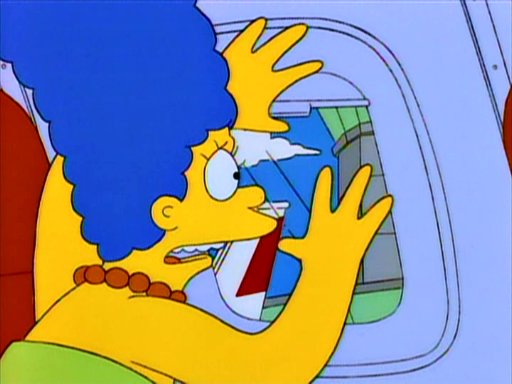
In a classic episode of The Simpsons, the family wants to go on vacation, but when their plane is about to take off, the family learns that Marge has a fear of flying. “Let me off the plane,” she says and then starts pacing down the aisle back and forth.

“Let me off! Let me off! Let me off!”

Marge starts going to therapy and at the end of the episode, she uncovers childhood memories she must have locked away for years.

She recalls thinking that her father was a pilot, and child Marge follows him into a plane to find out that he was a stewardess–which was a rare occupation for men in the 60’s–and the embarassment of her father working a woman’s job apparently traumatizes her into having a fear of flying.

There were a few more adverse memories she recalled, and those were the ones that seemed more logical in explaining why she had the fear, but I won’t go into detail about them here. Just watch the episode, it’s hilarious!

Can you recall any traumatic events that have fundamentally wounded you for life? Or do you have any memories of being significantly inspired by someone that motivate you to this day? How have any of these influencing incidents impacted the way you behave in your present life?

Relationship With the Family: 

Your family is your first experience of what it’s like to be in a social circle, particularly in your formative years. The way you relate and interact with your extended family helps you develop the social skills (or lack thereof) that which you bring in to the rest of society, be it at school, post-secondary education, work, and the market place.

More importantly, your parents’ marriage vastly influences your ideas of love, marriage, and friendship. And depending on the bond you have with your parents–whether it’s strong, weak, or non existant–you’re automatically subjugated to either replicating or replacing your experience of them.

photocredit: http://www.wallpaperpanda.com

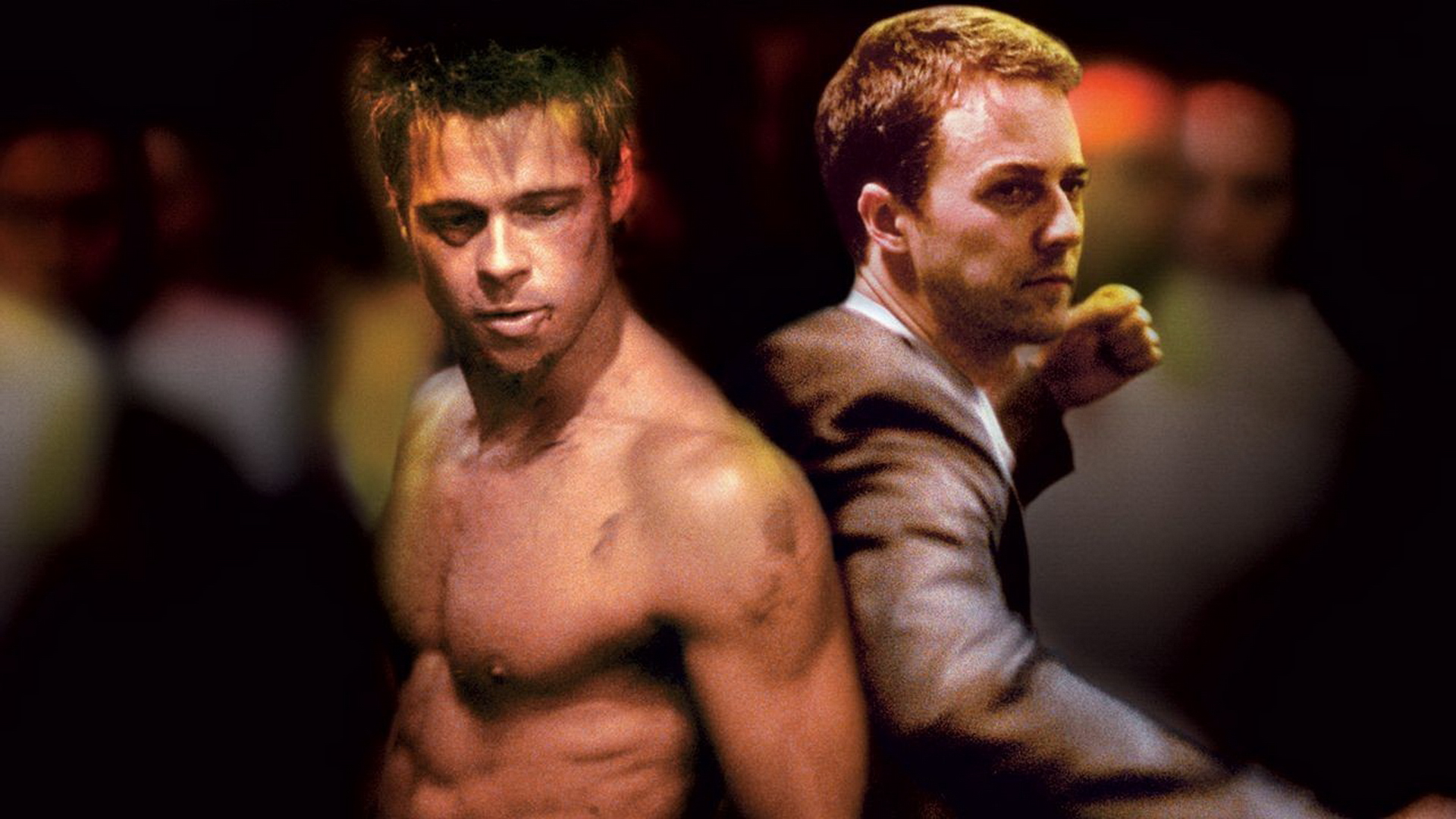
The nameless narrator in Fight Club by Chuck Palahniuk grew up, for the most part, without a father. So when he befriends the wise and witty renegade Tyler Duren, he looks up to him as a father figure.

When they start living together, Tyler gets into a sexual relationship with Marla Singer, a woman the nameless narrator met at a bunch of support groups. This becomes a recreation of the narrator’s childhood in that he never sees Tyler and Marla in the same room together, and becomes the middleman of their interactions–thus recreating his experience with his parents before they got divorced.

Furthermore, the underground Fight Club would not be possible had its members had their fathers around, or meaningful bonds with them if they were around for their childhoods. It’s well established among psychological circles that fatherlessness causes a variety of societal and psychological problems.

What template for romance have your parents imprinted for you? What relationship do you have with your extended family? How have these affected your mode of interaction with the rest of society?

Where They Grew Up:

From your country of origin, to your economic status growing up, and your childhood home, where you grew up also greatly defines how you’ll fit in to the rest of society.

The-Fresh-Prince-of-Bel-Air-1x01-The-Fresh-Prince-Project-the-fresh-prince-of-bel-air-20895611-1536-1152In West Philadelphia, born and raised, is where the Fresh Prince spent most of his days. But as you know by the title sequence theme song, he got in one little fight and his mom got scared, so he moved in with his uncle and auntie in Bel-Air.

What made this sitcom so great was how Will Smith’s care free and eccentric hood mentality clashed with the prestigious and more “dignified” culture of upper class Los Angeles.

This made for an interesting conflict with Will trying to behave in a way that was acceptable to the culture, while also staying true to himself. Though, the funniest parts of Fresh Prince for me was when he was free to be himself around rich and pretigious people, and they welcomed him with open arms, thus showing that cultural division can be torn down if both parties are willing to be friendly.

Are your current living conditions different from how you grew up? If so, what has this contrast done for your sense of identity? If not, was it a conscious choice to remain comfortable with the familiar or do you intend on breaking the cultural barrier?

Stay tuned for Crafting a Character Part 3: A Better Tomorrow

Crafting a Character Part 1: In the Now

photocredit: http://www.clipartbest.com

As I mentioned in my post about Goal, Motivation, Conflict, character is the most rudimentary ingredient in fiction.

From the writing guide Revision & Self Editing by James Scott Bell, I’ll be hand selecting three fundamental considerations for every post in my Crafting a Character series. For the purpose of self-knowledge, you could also create a character sketch of yourself and dig into the following concepts to obtain a goldmine of introspection.


I am More Than Just an A/S/L!

The typical character sketch would include the age, sex, language, and other physical traits of a person. If you want to run deeper than a basic police profile, consider the following.

Point of Vulnerability: 

Knowing your character’s point of vulnerability can vastly shape your entire story. Figure out what their personal pitfalls are, what triggers their frustration the most. It will be one of the greatest deciding factors in  what they will react to and how.

photocredit: http://backtothefuture.wikia.com

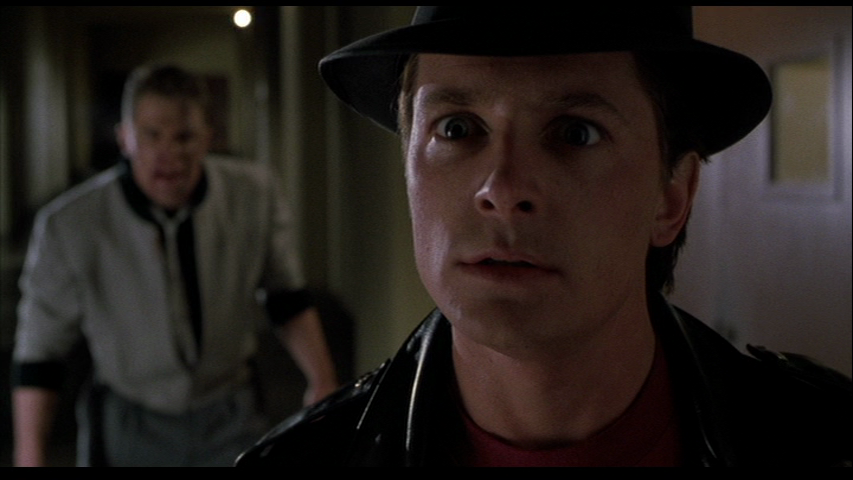
From Back to the Future, Marty McFly’s point of vulnerability is his sense of courage. No matter what era Marty finds himself in throughout the epic trilogy, he often walks away from a challenge until Biff Tannen (or his ancestor) asks, “what’s the matter, [are] you chicken?”

Our spunky, time traveling hero turns around and responds with “nobody calls me chicken!” This point of vulnerability causes Marty to never backdown to almost every challenge presented by this long running lineage of bullies. It often gets him into more trouble as opposed to escaping it.

At the end of the epic trilogy, Marty learns to feel secure with his integrity, thus knowing when to back down from a needless challenge. Although this test of bravery had served him well for the first half of the series, this point of vulnerability and how he deals with it is revealed for what it is; an ego trip designed to make him feel brave, while costing him progression toward his more important goals.

What’s your point of vulnerability? What kinds of challenges do you receive relevant to it, and how do you react to them? 

Physical appearance and how they feel about it: 

cat-lion-mirrorPhysical appearance only describes how a person looks, but what’s more important than this basic fact is how they feel about it.

In Skinny by Donna Cooner, an obese high school senior named Ever is tormented by the whisperings of “Skinny,” a voice in her head who constantly berates her about her weight.

When Ever breaks the chair she’s sitting on at a school assembly, she decides that enough is enough. She goes under gastral bypass surgery to help control her food intake, as well as start an exercice regimen that helps her expand her self confidence by shrinking her waistline.

Even people of average or beyond average attractiveness can have issues with their physical appearance. (For the sake of argument, let’s just say there is an objective standard for beauty, even though it’s usually in the eye of the beholder.)

For instance; Perfect by Natasha Friend features a dynamic duo of 13 year old girls that have bulimia. Since the death of her father, the protagonist Isabelle developed the habit of binging on a ton of food and purging it right out.

Isabelle joins a bulimia outreach group where she is surprised to find Ashley Barnum there, the popular and pretty girl at school. She is shocked to discover that the girl she once revered as picture perfect also has body issues, even though both girls are actually skinny. In fact, if Ever encountered these girls, she’d be repulsed by their skinniness and eating disorder.

How do you feel about your physical appearance? Have you updated your wardrobe extensively, started working out, or are you simply secure with it? What role has it played in your life?

What Others Think

photocredit: http://www.illustrationsource.com

The old addage, “you shouldn’t care too much about what others think,” is coupled with the cliche of “it’s easier said than done.” To some degree, we all concern ourselves with how others perceive us, whether extensively or minimally.

The Evolution of Bruno Little More by Benjamin Hale follows the story of the world’s first English speaking chimpanzee. In Bruno’s memoir, he details his struggles between civilizing himself among humanity and keeping true to his primitive roots.

The more self aware he becomes, the more he begins to worry about how others perceive him. Since a ridiculous standard is forced upon him, being the first talking chimp and all, it becomes increasingly difficult to contain his baser urges while maintaing the eloquent and intelligent personality he has developed since acquiring language.

When our self perception clashes with what others think of us, it creates a divide between staying true to ourselves or conforming to the crowd–or in some masterfully crafted instances, finding a middle ground.

How much do you concern yourself with external opinions? Has it caused you to change your behaviour or have you developed any habits that help ward off the temptation to please others?

Stick around for…

Crafting a Character Part 2:  It’s All in the Past

Crafting a Character Part 3:  A Better Tomorrow


Save $20,000 on Therapy by Buying a $20 Journal

Gotcha! There are no shortcuts to self-knowledge.

Obviously you can not achieve the same results you would in therapy through journaling alone. However, there is still a goldmine of value you can gain from jotting your thoughts down on paper.  You can potentially save a sum of money by doing your own self-work before hand, but let me make this clear: I am not at all claiming that therapy should be replaced with journaling. Put together, both tools go hand in hand like different instruments in a band.

photocredit: http://www.bookriot.com

If you can’t afford to go to therapy or just don’t feel comfortable with opening up to a stranger you may or may not connect with, journaling could be an affordable and more comfortable alternative to dipping your toe into self-knowledge.

Journaling can be used in a variety of ways including outright emotional release, decluttering your mind, and organizing creative ideas to name a few–but for the express purpose of this post, let’s focus on pursuing self-knowledge through this practice.

Following in the principle I provided in The Free Fall Journal, you need to feel comfortable with writing down your thoughts and feelings, most especially when you journal for self discovery. It’s an invitation to have an open and honest dialogue with yourself, after all.

Now, I’m pretty sure you’re thinking of that crazy guy you saw downtown arguing with himself at the street corner that one time, but I assure you it’s nothing like that. In fact, the reason why this man lost his mind enough to shamelessly berate himself in public is because he never learned how to keep it to himself and journal it out.

Just kidding!

Though within every joke, there is a hint of truth. We are not all that different from that guy, you and I. We all have an inner dialogue that runs through our heads all day, he just chooses to express it out loud, albeit in an unfiltered and frightening manner.

Keeping your most distressing thoughts and feelings to yourself doesn’t make them any less frightening unless you choose to write unfiltered. When we write about our experiences, we provide evidence to the contents of not only our minds, but most importantly the expression of our hearts.

“The unexamined life is not worth living.” – Socrates

You can just as easily journal for the sake of emotional release, but when you pursue self-knowledge through journaling, it’s important to also examine the evidence so you can understand yourself better. Self-knowledge is all about understanding what sets you off and gets you off (your couch 😛 ).

Having the luxury of reading back what you’ve written, you’re bound to notice a few patterns. When you recognize certain patterns in your thought process, you can then spend the time to explore why you may have them, and then decide on whether or not to break them.

That’s not to say that all patterns are negative, but generally speaking, the ones that fill us with the most doubt and distress are usually the ones that require more than one entry.In fact, some of the best journal entries are the ones that span beyond different dates, either in chronological order or streamlined between other topics. If you find yourself revisiting certain events or themes in your life, it just means that you’re comitted to understanding that aspect of yourself.

“Pain demands to be felt.” – The Fault in Our Stars by John Green

I cannot promise your entire life will be saved and understood through journaling, and I can not speak much for therapy in that regard, but the only guarantee I can offer is that if you commit to this practice frequently, you will develop a better relationship with yourself. It doesn’t have to be everyday, sometimes you need the break, but come back to your journal frequently and you will notice that you gradually become more honest in your writing.

Be sure to have compassion for yourself when you come across things you may not like re-reading, especially immediately after writing. Those are indicators that you might need to make drastic changes in your life, or at the very least, learn to play the hand you have been dealt.

Keep in mind that your journal is a safe place for you to express yourself authentically. So just like free fall journaling, do not worry about poise or eloquence in the way you write. Sometimes I decide not to separate paragraphs and write in the most unreadable chicken scratch possible (take THAT, would be invaders of my private journal!)–vulnerability is expontentially more important.

photocredit: http://spectralfairy.deviantart.com/

It has been in my experience that the less I filtered myself, the happier I became. I used to just reiterate what I learned from the plethora of self-help books I read with the intent of simply reprogramming myself to think positively. Although it helped in the short term, it only masked the pain, rather than helping me understand and heal it.

When I go back to my old initial journal entries, I can sense how inauthentic it was to cover up my pain by forcing myself to think positive, just for the sake of faking happiness. I don’t doubt that thinking positive can have its benefits, but there’s a disconnect between mind and heart when it’s not genuine. When I realized this–and wrote from a place of truth instead of falsehood–that’s when I finally got to experience what authentic positivity feels like.


Do you journal? If so, how has your experience been?

If you’re new to journaling or thinking of trying it out, what do you look to gain from it?


Goal, Motivation, Conflict

One of the most important driving forces of fiction is characterization. Without character, there is no story.

The reason why many of us are drawn to the art of storytelling (be it from film, music, TV, theatre or books) is because we like to relate to the characters who have clear goals, motivations, and conflicts to help build their character arcs.

It may not be clear to them–at least not right away at the beginning of a story–but as an audience we can easily identify with these concepts because as human beings, we all have unique goals, motivations, and conflicts to be confronted with in our own lives.

hiking-hiker-standing-mountain-top-1024x682

Writing is just like anything in life, it not only requires practice to make perfect, but also preparation. You can not just run a marathon without having gone on your own runs every morning to exercise them leg muscles. Well, you could, but you would most likely not have the endurance or capacity to do so. If you do, then you are a unique super human whom I will bow down to and feed grapes to from now until the end of eternity.

To help prepare your character for the journey that lies ahead, you outline their goals, motivations, and conflicts in a chart that looks a little something like this:GMC Chart

This GMC Chart is designed to help you gain clarity in undertanding exactly what your character wants, why they want it, and the conflicts that will arise to help challenge them. Without pressure, challenge or conflict, characters cannot grow. Think about your own life for a second and all the hardships you may have faced. Can you imagine who you would be today without having had overcome them?

“Pressure makes diamonds.” – George S. Patton

Let’s take a quick look at the purpose of each section of the chart and why they’re important.

WANTS TO/GOAL: This is where the clear cut desire is stated and outlines what the character wants to achieve. At the internal level, it’s what they would like to achieve at a personal level and  how they will grow as a person. The external level describes the effect they would like to have in their immediate world, or the entire world at large depending on the size and scale of your story.

BECAUSE/MOTIVATION: Why does the character have this desire? Internally, what do they struggle with or wish to improve on within themselves? Externally, what is it about their current circumstances that drive them to action? Once a goal is set, they need to have logical (sometimes illogical) reasons why they desire these things or we won’t understand why we should root for them in the first place.

BUT/CONFLICT: The but is the meat of fiction (hehehe) where the character will face obstacles that prevent them from achieving their goals. Internally, what holds them back from moving forward? Ego, lack of confidence, vanity? Externally, what are the circumstances in the empirical world that stand in their way? Could it be a family member, a friend, or a flat out foe? This is the most essential aspect of a story for the reasons I stated above. Without challenge, there is no growth.

SO: And finally, the so describes the actions the character will take in order to overcome (or attempt to overcome) their challenges and grow from them. Internally, what will be the ultimate personal growth gained from this battle of attrition? Externally, what effect will their overall actions have on their friends, family, and the other characters in their proximity?

Have they gotten what they wanted, or have their desires changed throughout the course of the  story?

Let’s take a quick look at that question in greater depth. Typically, a character should have a desire that gets fulfilled at the end of the story in a linear fashion. The internal and external goals stay the same and they receive the right challenges they need to achieve their goals.

However, sometimes the internal goals change while the external goal stays the same. For instance, a man who was bullied in school may have the external goal to become a teacher for the internal purpose of regaining his lost power. Then maybe he confronts one of the bullies from his past and that bully actually apologizes for his past behaviour. And so this character may remain a teacher, but instead of using his position for power, his internal goal transforms into being an inspiring source of education for his students.

On the flip side, sometimes the internal goal may stay the same, but the external effect will change like for a woman who’s internal goal is to help people. She may start out as a real-estate agent and fulfill her goal by helping people find afforadble housing in areas convenient to their lifestyles, but as the story goes onward, she loses interest in flipping houses. Though since she still has the yearning burning desire to help people, perhaps she becomes a self-help author and motivational speaker to inspire people on how to live instead of where to live.

How to apply this to your life: 

The GMC chart is both used for the long-term and short-term clarification for what drives a character. A GMC chart can be made for an entire story’s overall narrative, but it’s also recommended that writers chart out the GMC for each chapter so there’s logical cohesion and progression throughout the story. You can do the same for the overall trajectory of your life and help understand your own goals and motivations, and then help identify the buts that butt in your way of achieving them. If you know what prevents you from your goals, you’ll have better understanding in what you need to do to overcome those conflicts.

“Knowing is half the battle!” – GI Joe. 

 Why this exercise is important:

Like writing the narrative of a character’s life, you can take control over your own with the GMC chart by identifying what your desires are and why they are important to you. Take the time to understand what’s holding you back in terms of your own inner-critic, as well the outer-critics in your life, and you can formulate an action plan to overcome them. It may be something as large as cutting poisonous people from your life or attempting to repair and transform your relationships–or it may be something as simple as stepping out of your own way.


Download the: GMC Template here!