How I Got Into Young Adult Novels Through Chuck Palahniuk

damned-headline-hi

I used to think that Young Adult novels were lame, because I assumed that you weren’t allowed to cuss or discuss dark and gritty topics. Of course, that’s what happens when you assume things; you make an ass out of u and me. Now that I’ve actually read a ton of YA novels, I am hooked!

And I actually owe it all to Chuck Palahniuk!

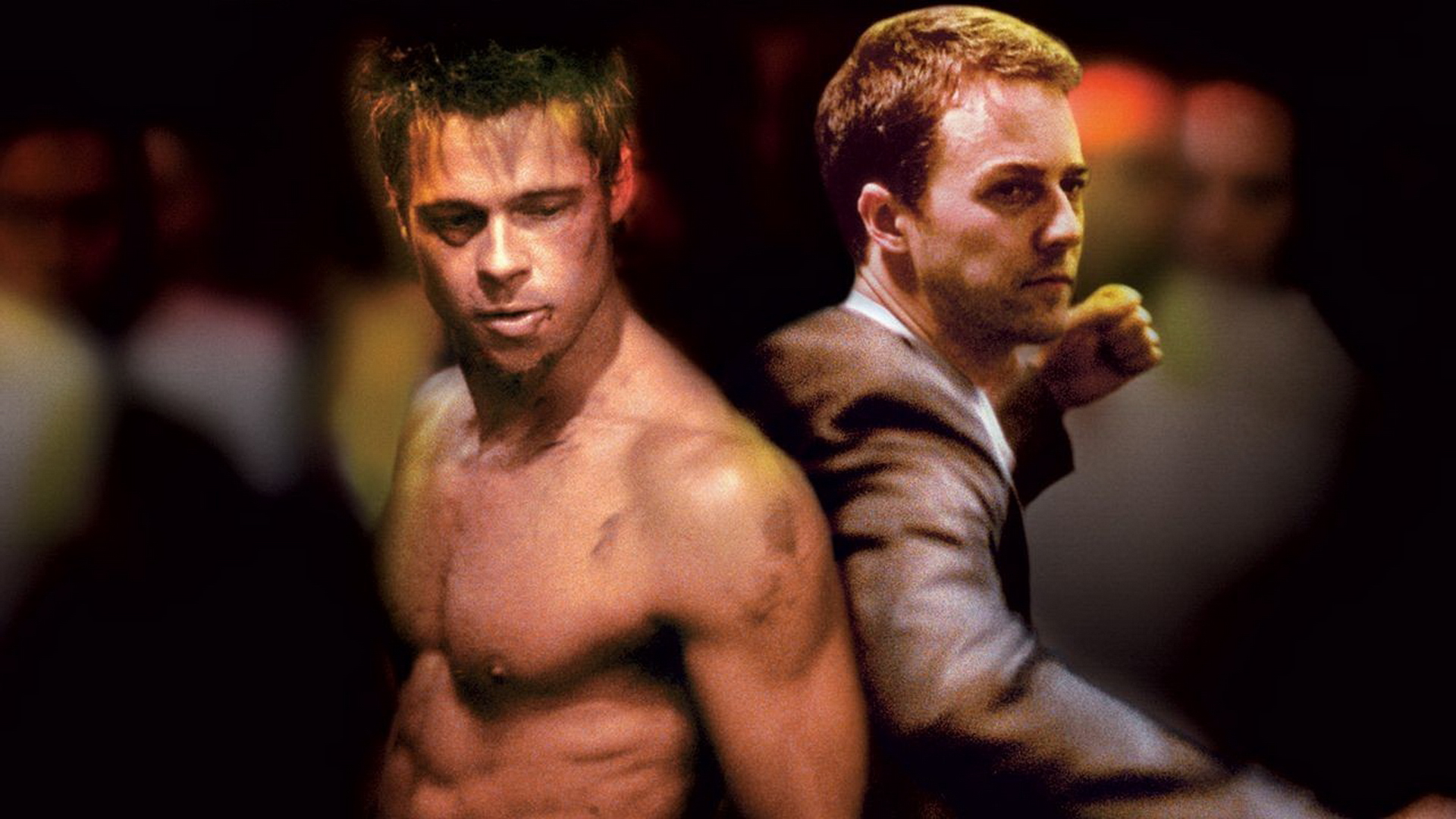
Although he writes mature adult novels–full of excessive vulgarity, disgusting details, and overtones darker than the night itself–I got into YA thanks to him. Most of his novels do feature adult characters getting into adult situations, most of which involve some awesome plot twists (Fight Club, Invisible Monsters, Snuff), but there’s one book of his that features a fat 12-year-old dead girl in Hell.

Damned follows the story of Madison “Maddie” Spencer, the daughter of two Hollywood big shots who are constantly too stoned out of their minds to give her any genuine attention or affection. She apparently dies of a mairjuana overdose, and is sent to Hell where she meets a group of other damned souls who become her posse of misfists.

The book is often described as The Breakfast Club meets Are You There God? It’s Me, Margaret in Hell because each chapter begins with “Are You There, Satan? It’s Me, Madison,” and she shares the coming of age struggle Margaret faces in Judy Blume’s book.

Now, I’ve watched The Breakfast Club several times in my life and have always connected with the universal themes of the teenage struggle, but never once have I ever read a Judy Blume book. Why would I anyway? Aren’t her books written for little girls?

Apparently not!

Don’t get me wrong, I love Damned, but the sequel Doomed, felt a little overwritten compared to its predecessor. The narrative voice felt too intellectual and masculine to be that of a 12-year-old girl’s, but I read it anyway because I highly enjoyed the overall adventure of Maddie’s goal to confront Satan and find out why she had to die early and be damned to eternal torture.

(Chuck Palahniuk’s idea of eternal torture includes walking on hills of toenail clippings, passing by rivers of pimple puss and rejected human fluids, and my personal favourite; working at a telemarketing office to troll the people still alive on Earth)

So I got curious about Are You There, God? It’s Me, Margaret just so I can see how much of it actually inspired, or at least reflected the content in Damned. Aside from the chapter openings and having a 12-year-old protagonist, there was obviously a stark contrast that astounded me.

Gone were the supernatural elements, gross descriptions, vulgarity, drugs, and violence etc.
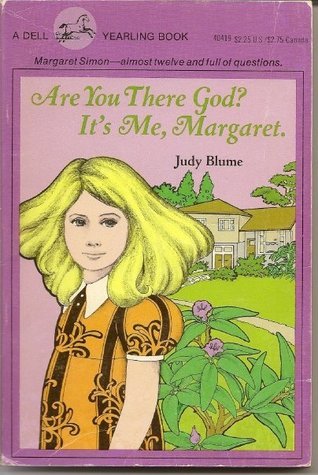
What I got instead was a story about a middle grader feeling left out because she’s the only girl in her class who hasn’t gotten her period yet. That made for a great a surface theme–since I’ve never considered what the female puberty experience was like, though it was a welcomed surprise–but what really captivated me about the book was Margaret’s struggle with her religious beliefs.

It surprised me immensely when I started noticing the bigger picture. Margaret was raised without religious affiliation; her father is Jewish and her mother is Christian–but pushed  neither religion on her–and so Margaret’s internal struggle, on top of her desire to get her first period, was trying to find religious singularity.

[spoiler]There was this epic scene where her grandmother and her parents argue about what religion she should conform to, but she gets so frustrated and cries out about how no one even is stopping to consider what she wants to believe in.[/spoiler]

Although I prefer to read more mature YA novels with older characters who do cuss and discuss dark topics, Judy Blume single handedly diminished my assumptions about YA. Now I have absolute respect for it because it’s now that I understand the appeal to it.

Being a teenager is an intense time in anyone’s life because it’s when we begin to truly begin to question our identities as individuals separate from culture. Our hormones and emotions are the most sensitive and although it’s such a small amount of time in our overall lives, they are the most intense, bringing with it the growing pains that shape us. The teenage experience is universal for anyone who has survived it.

Stay tuned for How I Conceived the Idea of It Starts at Home…

Music as a Milestone Marker

Music-is-the-fire-in-my-heart-music-35607170-471-458For the first decade of my life, I actively avoided music, but now I can’t go a day without listening to it. In the past month, I have spent $100 getting new albums from Rock bands I recently discovered. I. Can’t. Stop.

When I was growing up, though, everybody listened to Rap and R&B. I kept hearing the same songs everywhere and I couldn’t stand the lack of variety beyond the top hits. I have nothing against these genres– in fact, I actually have phases where I’ll listen to nothing but Rap and R&B–but it just wasn’t for me at the time.

The only music I ever enjoyed came from TV shows, movies, or video games. Otherwise, I never sat down and listened to anything for its own sake. But then came one of my favourite video games from my childhood, Donkey Kong Country 2: Diddy’s Kongquest. There was a level called Bramble Blast where most of it consisted of shooting Diddy and Dixie Kong through a bunch of barrells and the background music for the level was incredibly relaxing! Perhaps to contrast the chaotic nature of the barrells.

I was so enamored by this well crafted composition that I paused the game and listened to the song for about an hour. To this day, listening to Stickerbrush Symphony still captivates me with its simple and catchy melodies. From that point on, I had much more appreciation for the rest of the game’s music score, which I believe is still one of the best OST’s in gaming history.

David Wise, thank you for pushing the SNES’s 16-bit instrumentation capabilities!

When I beat the game and stopped playing it, I was left without music once again. It wasn’t until I stumbled upon a music video featuring an animation with the art style of Todd McFarlane, the artist and creator of my then favourite comic book character Spawn. That music video, my friends, was for Korn’s hit single Freak on a Leash.

That was when I realized Rock music was my natural element. I just love how the combination of guitars, bass, and drums can produce so many different styles of music alone. Whether the guitarists use clean channels and/or distorted tones–or in Korn’s case, a crap ton of FX pedals–I’m always up for a rockin’ riff that gets me headbanging. Especially if the band’s got a great vocalist who can belt out the power vox! Can I get a “hell yeah”?

I’ve since listened to other genres of music throughout my lifetime from Dubstep to Lounge, Trip-Hop, Pop and much much more, but the music I always find myself listening to is some sort of Rock. This could range from Metal, Mathrock, or even Pop Punk–WHATEVER! I’m not here to impress you with the long list of bands and genres I’ve listened to.

The point is; I’ve listened to a kaleidscope’s variety of stuff lo’ these past two decades or so.

Each and every band, and genre, is associated with a certain point in my life, and I am instantly reminded of those eras of my life whenever I go back in my collection and listen to something I haven’t listened to in a while.

Korn reminds me of my early teen years battling with anger and depression, the DnB, Trip-Hop, Lounge, and Ambient music reminds me of when I learned to relax a little more in my early 20’s. Fast forward to today, the vast collection of new Rock albums I bought recently will remind me of this particular time in my life where I’ve finally become comfortable with myself having delved deeply into self-knowledge and greatly improving my life circumstances.

I see music as a way of marking milestones in your life. When you spend enough time listening to a certain artist during a high or low point in your life, you’re training your brain to associate those tunes with that specific place in time.

After all, the media we consume is a reflection of who we are, it’s a piece of us. It’s how we identify ourselves in the world. By empathizing with the expression of art, we let it speak for us when we don’t want to explain ourselves, or we let it embellish our inner most thoughts and desires. Why do you think so many songs are about finding love?

Our particular tastes and preferences in music, art, and literature all have something to say about us. This is why we enjoy sharing these things with those we love. Understanding what others are entertained by is a quick way to understanding how they think and feel about themselves and the world.  All you gotta do is ask why it moves them so much, and they’ll tell you everything you need to know about them.

Do you have any favourite artists you’ve listened to consistently throughout your life? Or on and off for any particular reasons?

Do you continuously seek to expand your music library? Do you have any favourite artists that invoke particular memories whenever you relisten to them after taking a long break?

For anything else music related and how you relate to it, let me know what you think in the comments below!

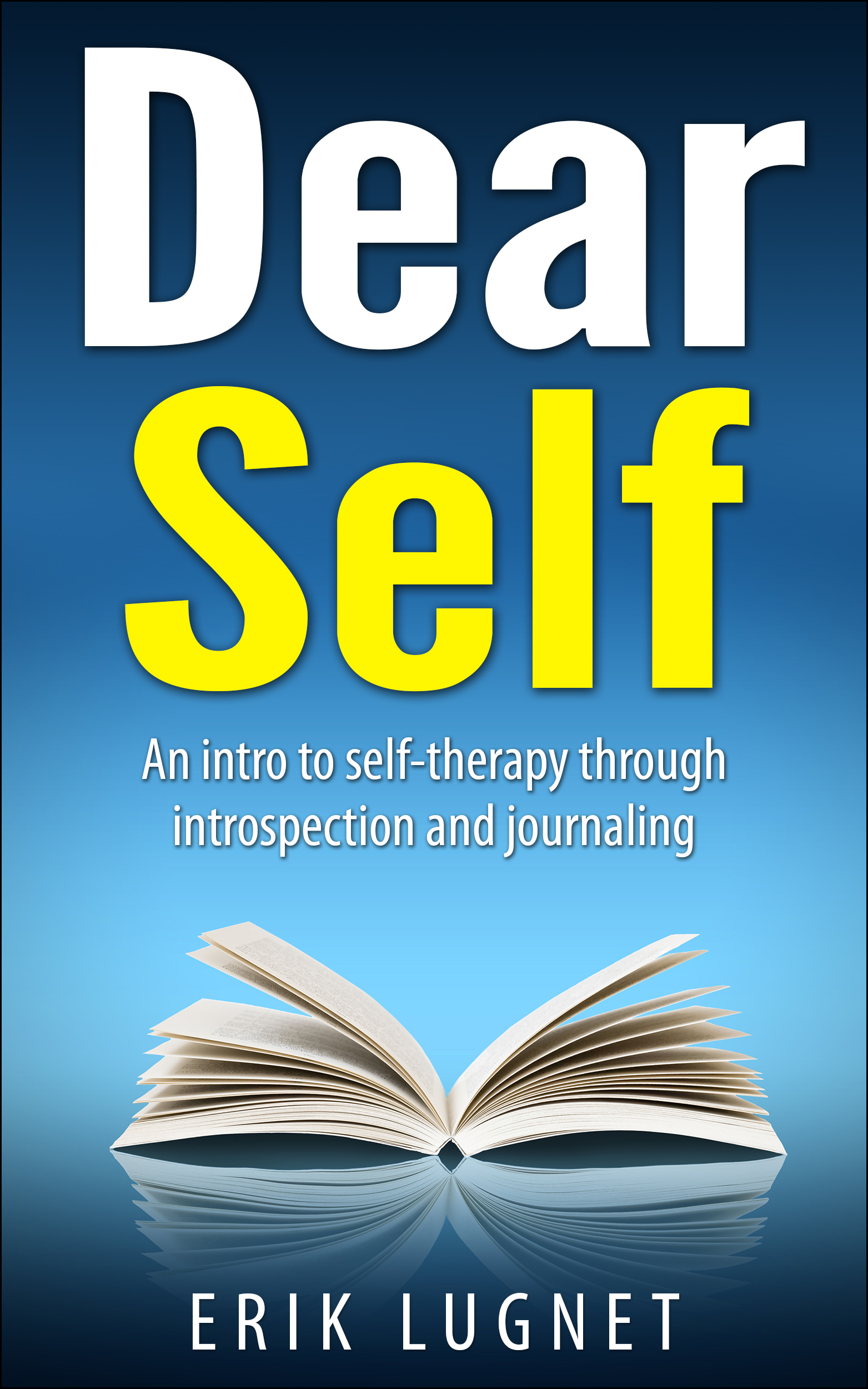
eBook Review: Dear Self by Erik Lugnet

dear self“Life can be difficult sometimes. It is not made easier by the sometimes overwhelming inner voices that criticize us into oblivion.”

So how can one climb out of this oblivion and learn to tame the inner dialogue that plagues many of us, thus preventing us from living happy, functional lives?

There are many answers to this question that require years of time, money, and energy invested into self work through journaling, therapy, and introspection. If that sounds like a daunting task, you no longer have to fear if the investment will be worth it or not.

With Erik Lugnet’s 17 page introduction to introspection, Dear Self gives you a quick and concise glimpse into the world of self-therapy and journaling. If you’re thinking of going to therapy, but are unsure if it may be right for you, this book is a great guide to trying out the process on your own to see if it may be up your alley.

The book begins with a list defining the traits of your True Self. It’s calm, empirical, assertive, honest, empathetic, curious, and compassionate. If you feel that you may have lost these traits due to the hardships of life, Dear Self makes a case as to how and why you could go about reclaiming your greatness.

Erik invites you to be curious and compassionate with yourself, and usually it does help to calm the storm in your head, but that’s not enough. Reworking your inner dialogue can be made easier by journaling and Dear Self briefly touches upon different mediums from the traditional longhand, to audio and possibly video. (What do you think vloggers are doing?) The invitation to write out your emotional experience in a gentle and patient way is possibly one of the simplest, but most powerful suggestions made in the book.

Then of course there’s also a small glimpse of Internal Family Systems to help understand the ambivelance most, if not all of us experience when it comes to understanding our emotions and motivations.

You do not need to be fully educated in the IFS approach to understand this aspect of Dear Self (though itis suggested) because it is explained in such an obvious way. Basically, our entire beings are comprised of different sub-personalities, and Erik’s main principle remains: learn how to approach these parts with curiousity and compassion.

At the beginning of the book, the caveat is put forth that a lot of what is shared is due to personal experience. I didn’t get that impression until much later in the book when Erik begins to talk about specific examples from his real life, most notably in the closing section that barely scratches the surface of the journey he’s been through. I believe that more examples of his own IFS conversations and journaling experience could have enhanced those sections to make the book feel less formal and more intimate, since intimacy with The Self is what this book is meant to promote.

Furthermore, in the section covering where The Self has gone, there is the example of a mother who is easily disturbed by noise, and how that might affect how she would raise her child as just an inconvenience. I think that example could have been fleshed out more if there was a bit more detail about how and what may have caused her aversion to loud noises by going into her history with possibly being yelled at, or witnessing loud confrontations between her parents to drive the point home.

There are also a few misplaced commas and syntax errors a simple re-read can fix, but all in all, Dear Self is a quick and concise read that should help you start on your path to self-knowledge. A revised and possibly a slightly extended version can help work out the kinks of this powerhouse of a debut book.

If you’re still wondering if the investment in yourself is worth it, I would argue that it would be. Because self-knowledge is a fundamental human trait, and without it, how can we possibly know how people relate to us if we don’t even know ourselves?

You can download Dear Self by Erik Lugnet for free at Smashwords, or if you’d like to support my friend and purchase it for $0.99, you can do so at Amazon!


Crafting a Character Part 3: A Better Tomorrow

photocredit: http://www.gorampup.com

We’ve taken a look at how our present lives are defined by our pasts, and to come full circle, we will delve into breaking the shackles of history and achieving freedom in the future.

As always, characters are driven by Goal, Motivation, and Conflict. All three keys play an important part into unlocking the potential that resides in all of us, fictional and real people alike. Here is how GMC is considered in a character profile:

The First Day of the Rest of Your Life

Main Desire: 

Desires drive all action, purpose, and intention. Having a clear understanding of your desires is fundamental to understanding what steps you need to take toward leading a fulfilling life, as well as providing value to the rest of the world.

Even if your initial desire is what propels you into action, the desire may change over time or evolve to something else based on how much you want to achieve. Sometimes you do get what you want and realize you desire so much more than you ever realized.

#16thingsithoughtweretrueSuch is the case for Morgan from #16Things I Thought Were True by Janet Gurtler. After her mother suffers a heart attack, Morgan gathers the courage and tenacity to ask about the biological father that was absent throughout her childhood.

At the start of the story, Morgan sets out to gain 5000 Twitter followers, while having 0 friends in the physical world because she feels alienated after having an embarassing video of her dancing in boy’s underwear going viral.

Due to certain circumstances, Morgan is forced to allow two of her co-workers, Adam and Amy, to accompany her on a road trip to seek out her biological father.

Although confronting him is her initial desire (as well as amassing a ton of Twitter followers), Morgan develops a bond with Adam and Amy; two co-workers she had barely liked or understood at a personal level before their heart warming–and sometimes gut wrenching–road trip together. Her true desire all along had been garnering connectivity, and it didn’t have to come from her long lost father.

What are your main desires? Have you achieved them only to realize there was something more meaningful out there? What steps are you taking today in order to achieve these goals in the future?

Major Strength:

Another important aspect of characterization is having strengths that contrast a character’s vulnerabilities. Many protagonists are victims of circumstance which drives us to sympathize with them, but in order for us to even want to root for them, they need to have major strengths that can help make them more appealing.

photocredit: http://images.idiva.com/

In the hit series How I Met Your Mother, Ted Mosby goes on a seemingly unending search for his soul mate. He starts off as a desperate lovelorn who just can’t catch a break because his desire often becomes a part of his major flaws.  Having this desire starts off as a way to avoid himself and have him develop the mentality that he is nothing without somebody to love.

However, throughout the course of this dramatic rom-com, we learn that he has a big heart and he’s deeply invested in his friends. The love that he provides for them transforms into love for himself and discovering his own value as an individual before meeting The Mother/Tracy McConnell.

Ted Mosby’s strength is his ability to love and his hopeful spirit, but it took transmuting it for himself and for what he already had in order to achieve his goal; meeting a woman who more or less resembles a combination of all his friends.

What are your major strengths? How do they play a role in helping you achieve your desires? 

Perpetual Passion and Main Mission:

The mark of a strong character is intertwining their personal desires with their major strength in order to contribute something to the world at large. People who want to make a difference in the world, or at least in their immediate world (interpersonal relationships), are always challenged by people who want to keep things the same and not improve the state of the world.

Having a mission and commiting to it is admirable because it’s the ultimate test of character to offer your gift to the world, despite of its initial reluctance to accept it–when ironically, the world may so desperately be in need of your gift.

dark-knight-rises-batman
Photo Credit: http://www.playmakeronline.com

Batman, despite all his violent brutality serves as a good example for a character rooted in their principles. He’s committed to fighting injustice, but will never ever kill criminals.

He believes anybody can be redeemed and sees the possible good in others all despite of the hatred he has for his parents’ murderer (which changes depending on which reiteration of the Batman story you read, watch, or play).

I could just as easily use a character who embodies the purist level of virtue, but I think Batman serves as the best example because he’s still fundamentally flawed being so addicted to enacting violence, and only stopping short of actual murder. It’s debatable whether or not he creates more villains than he puts away, but one thing is for sure: he is committed to his perpetual passion for fighting crime as his main mission.

What are you passionate about? What’s your main mission? What mark do you want to leave in the world and why do you think it’s important?

Crafting a Character Part 2: It’s All in the Past

photocredit: http://ivylaartista.com/

In the previous installment of the Crafting a Character series, we took a look at how characters think and behave in the present. What usually shapes those behaviours and attitudes is their past.

Backstory is the cornerstone of all character development because it’s in the past where almost the entire identity of a person is formed. Whether you’re creating the backstory of a character, or looking at your own history, the past has a ton of answers for your questions about the present and the future.

 Why Can’t You Just Let It Go?

Main Shaping and Influencing Incidents: 

Usually in childhood, but not always, we’ve all had significant moments in our lives where our views of the world and of ourselves were changed forever. These incidents range from being tragic, comical, or inspiring. Either way, discovering the life changing events in your own life, or creating one for your character, can drastically improve your understanding of what may drive a person to behave the way they do in the present.

photocredit: http://www.nohomers.net

In a classic episode of The Simpsons, the family wants to go on vacation, but when their plane is about to take off, the family learns that Marge has a fear of flying. “Let me off the plane,” she says and then starts pacing down the aisle back and forth.

“Let me off! Let me off! Let me off!”

Marge starts going to therapy and at the end of the episode, she uncovers childhood memories she must have locked away for years.

She recalls thinking that her father was a pilot, and child Marge follows him into a plane to find out that he was a stewardess–which was a rare occupation for men in the 60’s–and the embarassment of her father working a woman’s job apparently traumatizes her into having a fear of flying.

There were a few more adverse memories she recalled, and those were the ones that seemed more logical in explaining why she had the fear, but I won’t go into detail about them here. Just watch the episode, it’s hilarious!

Can you recall any traumatic events that have fundamentally wounded you for life? Or do you have any memories of being significantly inspired by someone that motivate you to this day? How have any of these influencing incidents impacted the way you behave in your present life?

Relationship With the Family: 

Your family is your first experience of what it’s like to be in a social circle, particularly in your formative years. The way you relate and interact with your extended family helps you develop the social skills (or lack thereof) that which you bring in to the rest of society, be it at school, post-secondary education, work, and the market place.

More importantly, your parents’ marriage vastly influences your ideas of love, marriage, and friendship. And depending on the bond you have with your parents–whether it’s strong, weak, or non existant–you’re automatically subjugated to either replicating or replacing your experience of them.

photocredit: http://www.wallpaperpanda.com

The nameless narrator in Fight Club by Chuck Palahniuk grew up, for the most part, without a father. So when he befriends the wise and witty renegade Tyler Duren, he looks up to him as a father figure.

When they start living together, Tyler gets into a sexual relationship with Marla Singer, a woman the nameless narrator met at a bunch of support groups. This becomes a recreation of the narrator’s childhood in that he never sees Tyler and Marla in the same room together, and becomes the middleman of their interactions–thus recreating his experience with his parents before they got divorced.

Furthermore, the underground Fight Club would not be possible had its members had their fathers around, or meaningful bonds with them if they were around for their childhoods. It’s well established among psychological circles that fatherlessness causes a variety of societal and psychological problems.

What template for romance have your parents imprinted for you? What relationship do you have with your extended family? How have these affected your mode of interaction with the rest of society?

Where They Grew Up:

From your country of origin, to your economic status growing up, and your childhood home, where you grew up also greatly defines how you’ll fit in to the rest of society.

The-Fresh-Prince-of-Bel-Air-1x01-The-Fresh-Prince-Project-the-fresh-prince-of-bel-air-20895611-1536-1152In West Philadelphia, born and raised, is where the Fresh Prince spent most of his days. But as you know by the title sequence theme song, he got in one little fight and his mom got scared, so he moved in with his uncle and auntie in Bel-Air.

What made this sitcom so great was how Will Smith’s care free and eccentric hood mentality clashed with the prestigious and more “dignified” culture of upper class Los Angeles.

This made for an interesting conflict with Will trying to behave in a way that was acceptable to the culture, while also staying true to himself. Though, the funniest parts of Fresh Prince for me was when he was free to be himself around rich and pretigious people, and they welcomed him with open arms, thus showing that cultural division can be torn down if both parties are willing to be friendly.

Are your current living conditions different from how you grew up? If so, what has this contrast done for your sense of identity? If not, was it a conscious choice to remain comfortable with the familiar or do you intend on breaking the cultural barrier?

Stay tuned for Crafting a Character Part 3: A Better Tomorrow