Crafting a Character Part 3: A Better Tomorrow

photocredit: http://www.gorampup.com

We’ve taken a look at how our present lives are defined by our pasts, and to come full circle, we will delve into breaking the shackles of history and achieving freedom in the future.

As always, characters are driven by Goal, Motivation, and Conflict. All three keys play an important part into unlocking the potential that resides in all of us, fictional and real people alike. Here is how GMC is considered in a character profile:

The First Day of the Rest of Your Life

Main Desire: 

Desires drive all action, purpose, and intention. Having a clear understanding of your desires is fundamental to understanding what steps you need to take toward leading a fulfilling life, as well as providing value to the rest of the world.

Even if your initial desire is what propels you into action, the desire may change over time or evolve to something else based on how much you want to achieve. Sometimes you do get what you want and realize you desire so much more than you ever realized.

#16thingsithoughtweretrueSuch is the case for Morgan from #16Things I Thought Were True by Janet Gurtler. After her mother suffers a heart attack, Morgan gathers the courage and tenacity to ask about the biological father that was absent throughout her childhood.

At the start of the story, Morgan sets out to gain 5000 Twitter followers, while having 0 friends in the physical world because she feels alienated after having an embarassing video of her dancing in boy’s underwear going viral.

Due to certain circumstances, Morgan is forced to allow two of her co-workers, Adam and Amy, to accompany her on a road trip to seek out her biological father.

Although confronting him is her initial desire (as well as amassing a ton of Twitter followers), Morgan develops a bond with Adam and Amy; two co-workers she had barely liked or understood at a personal level before their heart warming–and sometimes gut wrenching–road trip together. Her true desire all along had been garnering connectivity, and it didn’t have to come from her long lost father.

What are your main desires? Have you achieved them only to realize there was something more meaningful out there? What steps are you taking today in order to achieve these goals in the future?

Major Strength:

Another important aspect of characterization is having strengths that contrast a character’s vulnerabilities. Many protagonists are victims of circumstance which drives us to sympathize with them, but in order for us to even want to root for them, they need to have major strengths that can help make them more appealing.

photocredit: http://images.idiva.com/

In the hit series How I Met Your Mother, Ted Mosby goes on a seemingly unending search for his soul mate. He starts off as a desperate lovelorn who just can’t catch a break because his desire often becomes a part of his major flaws.  Having this desire starts off as a way to avoid himself and have him develop the mentality that he is nothing without somebody to love.

However, throughout the course of this dramatic rom-com, we learn that he has a big heart and he’s deeply invested in his friends. The love that he provides for them transforms into love for himself and discovering his own value as an individual before meeting The Mother/Tracy McConnell.

Ted Mosby’s strength is his ability to love and his hopeful spirit, but it took transmuting it for himself and for what he already had in order to achieve his goal; meeting a woman who more or less resembles a combination of all his friends.

What are your major strengths? How do they play a role in helping you achieve your desires? 

Perpetual Passion and Main Mission:

The mark of a strong character is intertwining their personal desires with their major strength in order to contribute something to the world at large. People who want to make a difference in the world, or at least in their immediate world (interpersonal relationships), are always challenged by people who want to keep things the same and not improve the state of the world.

Having a mission and commiting to it is admirable because it’s the ultimate test of character to offer your gift to the world, despite of its initial reluctance to accept it–when ironically, the world may so desperately be in need of your gift.

dark-knight-rises-batman
Photo Credit: http://www.playmakeronline.com

Batman, despite all his violent brutality serves as a good example for a character rooted in their principles. He’s committed to fighting injustice, but will never ever kill criminals.

He believes anybody can be redeemed and sees the possible good in others all despite of the hatred he has for his parents’ murderer (which changes depending on which reiteration of the Batman story you read, watch, or play).

I could just as easily use a character who embodies the purist level of virtue, but I think Batman serves as the best example because he’s still fundamentally flawed being so addicted to enacting violence, and only stopping short of actual murder. It’s debatable whether or not he creates more villains than he puts away, but one thing is for sure: he is committed to his perpetual passion for fighting crime as his main mission.

What are you passionate about? What’s your main mission? What mark do you want to leave in the world and why do you think it’s important?

Crafting a Character Part 2: It’s All in the Past

photocredit: http://ivylaartista.com/

In the previous installment of the Crafting a Character series, we took a look at how characters think and behave in the present. What usually shapes those behaviours and attitudes is their past.

Backstory is the cornerstone of all character development because it’s in the past where almost the entire identity of a person is formed. Whether you’re creating the backstory of a character, or looking at your own history, the past has a ton of answers for your questions about the present and the future.

 Why Can’t You Just Let It Go?

Main Shaping and Influencing Incidents: 

Usually in childhood, but not always, we’ve all had significant moments in our lives where our views of the world and of ourselves were changed forever. These incidents range from being tragic, comical, or inspiring. Either way, discovering the life changing events in your own life, or creating one for your character, can drastically improve your understanding of what may drive a person to behave the way they do in the present.

photocredit: http://www.nohomers.net

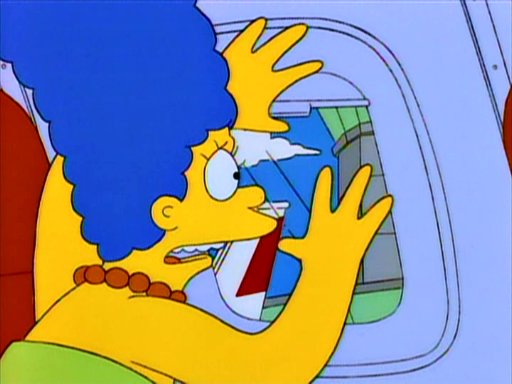
In a classic episode of The Simpsons, the family wants to go on vacation, but when their plane is about to take off, the family learns that Marge has a fear of flying. “Let me off the plane,” she says and then starts pacing down the aisle back and forth.

“Let me off! Let me off! Let me off!”

Marge starts going to therapy and at the end of the episode, she uncovers childhood memories she must have locked away for years.

She recalls thinking that her father was a pilot, and child Marge follows him into a plane to find out that he was a stewardess–which was a rare occupation for men in the 60’s–and the embarassment of her father working a woman’s job apparently traumatizes her into having a fear of flying.

There were a few more adverse memories she recalled, and those were the ones that seemed more logical in explaining why she had the fear, but I won’t go into detail about them here. Just watch the episode, it’s hilarious!

Can you recall any traumatic events that have fundamentally wounded you for life? Or do you have any memories of being significantly inspired by someone that motivate you to this day? How have any of these influencing incidents impacted the way you behave in your present life?

Relationship With the Family: 

Your family is your first experience of what it’s like to be in a social circle, particularly in your formative years. The way you relate and interact with your extended family helps you develop the social skills (or lack thereof) that which you bring in to the rest of society, be it at school, post-secondary education, work, and the market place.

More importantly, your parents’ marriage vastly influences your ideas of love, marriage, and friendship. And depending on the bond you have with your parents–whether it’s strong, weak, or non existant–you’re automatically subjugated to either replicating or replacing your experience of them.

photocredit: http://www.wallpaperpanda.com

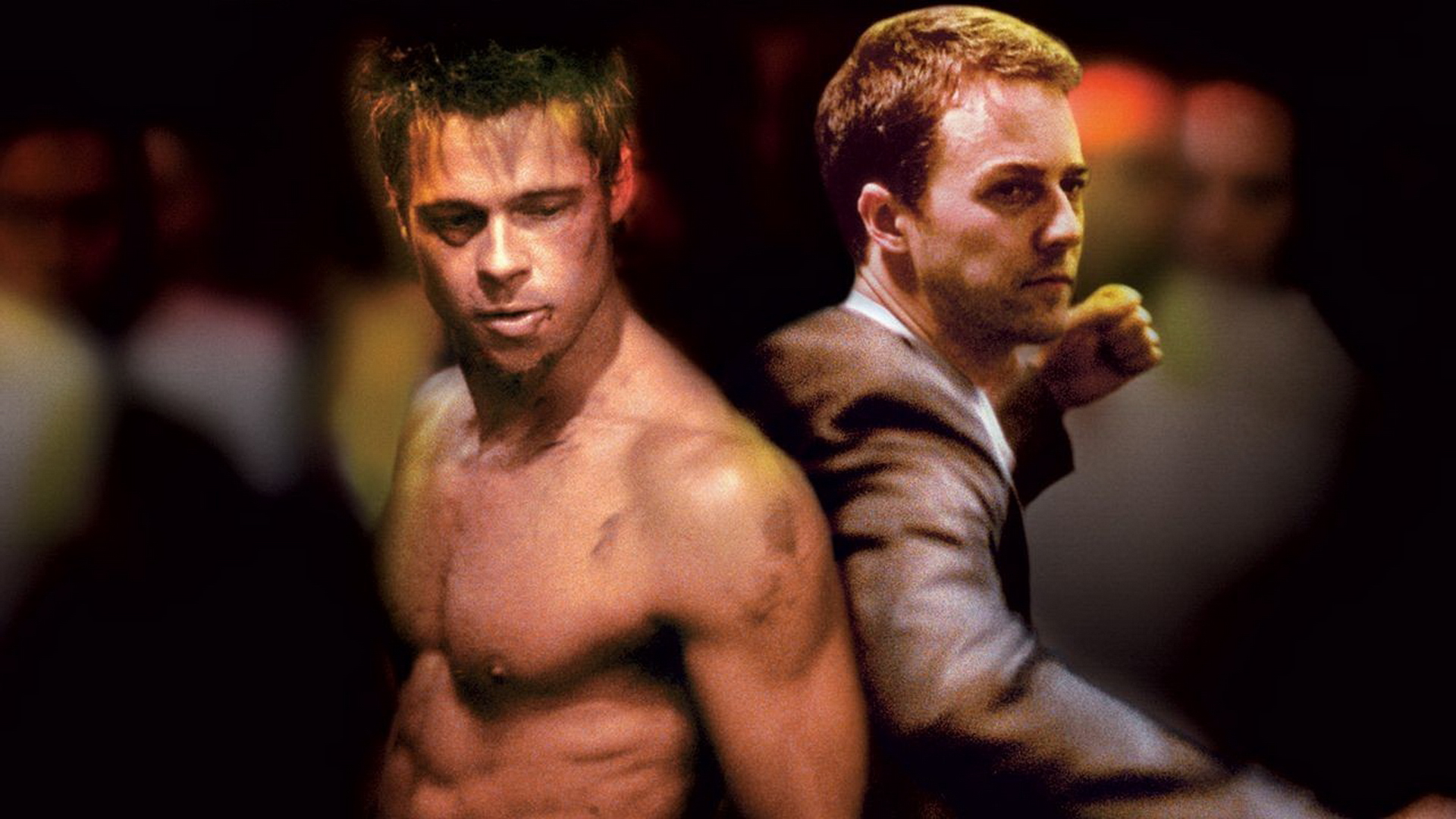
The nameless narrator in Fight Club by Chuck Palahniuk grew up, for the most part, without a father. So when he befriends the wise and witty renegade Tyler Duren, he looks up to him as a father figure.

When they start living together, Tyler gets into a sexual relationship with Marla Singer, a woman the nameless narrator met at a bunch of support groups. This becomes a recreation of the narrator’s childhood in that he never sees Tyler and Marla in the same room together, and becomes the middleman of their interactions–thus recreating his experience with his parents before they got divorced.

Furthermore, the underground Fight Club would not be possible had its members had their fathers around, or meaningful bonds with them if they were around for their childhoods. It’s well established among psychological circles that fatherlessness causes a variety of societal and psychological problems.

What template for romance have your parents imprinted for you? What relationship do you have with your extended family? How have these affected your mode of interaction with the rest of society?

Where They Grew Up:

From your country of origin, to your economic status growing up, and your childhood home, where you grew up also greatly defines how you’ll fit in to the rest of society.

The-Fresh-Prince-of-Bel-Air-1x01-The-Fresh-Prince-Project-the-fresh-prince-of-bel-air-20895611-1536-1152In West Philadelphia, born and raised, is where the Fresh Prince spent most of his days. But as you know by the title sequence theme song, he got in one little fight and his mom got scared, so he moved in with his uncle and auntie in Bel-Air.

What made this sitcom so great was how Will Smith’s care free and eccentric hood mentality clashed with the prestigious and more “dignified” culture of upper class Los Angeles.

This made for an interesting conflict with Will trying to behave in a way that was acceptable to the culture, while also staying true to himself. Though, the funniest parts of Fresh Prince for me was when he was free to be himself around rich and pretigious people, and they welcomed him with open arms, thus showing that cultural division can be torn down if both parties are willing to be friendly.

Are your current living conditions different from how you grew up? If so, what has this contrast done for your sense of identity? If not, was it a conscious choice to remain comfortable with the familiar or do you intend on breaking the cultural barrier?

Stay tuned for Crafting a Character Part 3: A Better Tomorrow

The Free Fall Journal

One of the most common challenges in writing is the dreaded “Writer’s Block” phenomenon. It’s when you just don’t feel like writing for a variety of reasons, some of which include; lack of inspiration, doubt in one’s own abilities, and real life just to name a few. Perhaps in the future I will cover Writer’s Block in more depth, but for now I would like to present to you a helpful exercise that helps in combatting this wall of infinite confidence destruction.

free-fallThe Free Fall Journal is where you set a timer for yourself (from 10-30 minutes) and write to your heart’s content until the timer ends. The goal here is not to be fancy or eqloquent in your writing, rather free in expression as you fall into the page and simply let your thoughts out without stopping or editting in the process.

Whether you’re writing in long hand or typing into a document, never lift your pen off the page (except between words and punctuation of course) or your palms off your keyboard. Just write whatever comes to your stream of consciousness, even if it’s “I don’t want to write now, this is stupid. What the hell is that Marlon guy talking about?”

Writers and non-writers alike suffer from the plague of perfectionism, and writing a Free Fall Journal is a way of saying to hell with perfection as you allow yourself to write whatever feels natural. Maybe what comes to mind right away is gold or maybe it’s absolute crap. Who cares?!

The point is to feel free to express yourself without censorship and without self editting. We live in such a self-conscious society where we constantly worry about what people think of us, and sometimes we go insofar as to filter our own thoughts and think that they are worthless. Well, as long as you’re not planning anything malicious against another human being and are actually considering doing it, then feel free to think what you like. There’s no such thing as Thought Police except for in our own minds. Set your thoughts free! Try writing a Free Fall Journal.

How to apply this to your life:

Even if you’re not a writer, this exercise will help you feel comfortable with your own thoughts. You can write whatever you like; a delicious (or disgusting) recipe, manual instructions, a journal entry, or even the beginning of a story. The possibilities are endless. Remember, no one ever has to read it but you, and you might not even want to keep it, though I suggest you do for interesting re-reading purposes. You’ll be surprised by your own train of thought, sometimes even scared, and often for me, I get amused by what I’ve written.

Why this exercise is important:

As I mentioned earlier, we do live in a self-conscious society, usually afraid of outside opinions. Take back your dignity and self respect by trying out a Free Fall Journal. The only judge is you and it’s up to you to be fair, harsh, or even nice to yourself. A Free Fall Journal is a place where you can feel safe being unfilitered and unexamined by others, unless if you want to share it with people, that’s fine too.

So try it on for size, give yourself 10-30 minutes a day to free fall and you’ll be amazed by how freeing it is to your self esteem. I personally free fall to let myself write the stupidiest, incoherent, sometimes most vile crap just so I know it’s okay to express myself in a safe and creative way. Give yourself the same luxury!