Self-Knowledge Through Video Games: Part 2

ggos

While it’s customary to be a good sport, you don’t have to say GG or pat your opponent on the back for a game well played. However, whether you do or not, depending if you win or lose, says a lot about your character.

I don’t suggest handing out participation trophies for everybody, but the acknowledgement of someone doing their best is always worthwhile, especially when the game is something they want to get better at at some point.

One way to help someone improve is to provide constructive criticism in place of the usual shit talking that is commonly known in online gaming. It’s just so much easier to do it when there’s no face in person to do it to, you’re safe behind a screen. We can talk about keyboard warriors some other day, but for now let’s jump back into achieving self-knowledge through video games.

Respect For Opponents and Skills

All of the best games, whether it’s a sports game or a video game, are the ones that include equally matched opposition. They challenge each other to their limits and dish it out. I am instantly reminded of one of the fights that made UFC popular today which was between Forrest Griffin and Stephan Bonnar when they fought for the The Ultimate Fighter Season One prize of getting a contract with the UFC.

These guys slugged it out at such a consistent pace and traded blows so equally that it made for one of the most entertaining fights in history. They didn’t hold back, they put all their blood, sweat, and tears into the fight because not only did they want to make use of their time training for this moment, but also because they respected each other to know that the other guy would be doing the same thing: giving it his all.

So what happens when there’s a disparity between two different parties? There’s a few ways to go about it and I’ll share with you my less extreme. While I will never step into a caged octagon and slug it out in a bloody bone cracking mixed martial arts fight, I learned the value of practising skills from the safety of my couch playing video games.

Yeah, how dare I compare the rigorous training regimen of a UFC fighter to me playing video games in my sweat pants? Get a smug ass look from Patroklos for a moment…
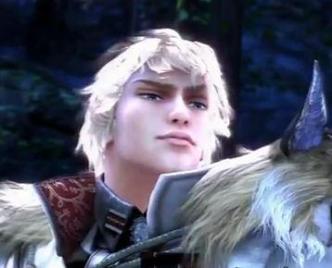
Smugtroklos

aaaand we’re back!

As I said before, I used to play a ton of Soul Calibur IV and V, but more recently I’ve put in a ton of hours in an online battle arena game called Brawlhalla. It’s a free to play game on Steam and is a ton of fun being really easy to pick up, and decently tough to master. It’s basically like Super Smash Brothers with mythical legends instead of Nintendo mascots.

I used to have this mentality of chasing people down in the online rank mode, swearing revenge on people for beating me to a pulp, but I have since changed my approach. I have now adapted one that I think is more beneficial to my growth as a Brawlhaller, some of which I was starting to adapt late into my Soul Calibur craze just before giving up on the game to move on to bigger things in life than just pure gaming. (More on this as well later if anyone’s interested)

What I learned lately is that when people complain about certain tactics they lose to, I theorize that it is their implicit way of asking for help on improving their game. I used to find myself complaining about people using certain tactics and calling it cheap, and unless they do something that literally breaks the game coding that you can’t counteract it, chances are that you can poke holes in people’s seemingly impenetrable strategies.

Say-NO-to-SPAM-325x321.pngSo there I was saying “all this guy does is the SAME move,” to which us gamers refer to as “spamming.” Spamming is easy to counteract when you get a sense of your opponent’s patterns and the rate they spam a certain move, and if you’re aware of it all, it becomes extremely easy on learning how to not get caught by it.

In Brawlhalla, someone I faced complained about my character choice and how cheap her moveset was, but instead of doing the typically douchey thing as to tell him that he sucks and that he’s a n00b who should go cry to his mommy–I gave him pointers.

I like to give compassion to those who complain about losing rather than add salt to their wounds since I’ve been trying to be a better person lately. I actually gave him specific tactics on how to counteract some of the easily punishable moves and strategies I was employing and it disarmed him from wanting to shit talk to me.

Likewise when I get my ass handed to me in a game, I try my best to approach the loss with some humility. I’m starting to guage when someone is really good at the game or when they’re aggressive at it because they have a chip on their shoulder. If it’s the former, I will humbly ask what I can do to improve. They’re better than me, and if they beat me, they must have an upper hand in knowing the game so I ask what I can do better.

More often than not, they are nice enough to give me the honest feedback I need to know where I’m lacking in skill. If they’re not helpful and want to be a salty player then I say FUCK ‘EM! I don’t want advice from people who play to win and take the game personally. It has a tendency to rub off on you so try not to engage with salty players. That goes for winners and losers.

I find tremendous fun in continuously improving my skills and I have more fun when I get better at certain games. I feel a sense of growth when I can move past my losses, not take them personally, even if–or I should say especially when–someone shit talks to me whether I win or lose. It’s their baggage to deal with, not mine.

Self-Knowledge Through…Video Games?!

avgnOne unexpected medium I derive self-knowledge from is video games, and I know what you’re thinking. “Marlon, this is just your way of justifying the countless hours you sink into video games by trying to add some kind of meaningful reason to it.”

Well…you see right through me like grandma’s underpants.

In all seriousness, though, I do operate from the philosophy that playing games reveals a lot about ourselves. At its core, it has a lot to do with respect. Here’s what I take in account when I play a game with anyone or flying solo:

  • Respect for the Rules
  • Motives for Playing
  • Respecting Opponents and Skill Levels
  • Respecting Your Emotions

Respect for the Rules

When you play a game, a basic understanding of the rules and gameplay is important in knowing what you can or cannot do. Some games, most especially ones that aren’t programmed into a video game, allow for more rule breaking. To what degree do you or your opponents abide by the basic guidelines and for what reason will you bend or break the rules? Is it to gain an advantage over each other or is it to have more fun?

Let’s take chess as a simple example. When your opponent is not looking, you can easily pocket some of their pieces one by one, creating the illusion that you’ve taken them already. (Don’t try at this early on in the game, or you’ll be in big trouble!) That would be outright cheating and takes away from the fun of the game.

Or you can break the rules for fun by making up movements different from the original ones. One time, my nephew was over and didn’t want to go home, so we made up all crazy sorts of changes. A Knight can stampede a whole line, and if a pawn reaches the other side, instead of changing into a better piece, they can go back to the start AND regain a better piece at the spot where the pawn landed.

Motives For Playing

“You suck, noob! I PLAY TO WIN!!!” Cries almost every person who plays in online competitive games.

Winning is fun, but if you’re too focussed on winning all the time, there are a variety of different consequences. Losing could hurt your ego tremendously, you might play so aggressively that no one has fun (not even you), or you can just as easily keep on losing and then going for rematch after rematch, trying so hard to get that win.

I had a phase myself where I had to chase down certain players in Ranked Mode when I used to play Soul Calibur IV and V almost every night of my life. I took it personally if I lost, and I’ll be damned to stay up ’til 5am finding that guy who RUNG ME OUT! DUDE THAT IS SO CHEAP!!!

Well, past Marlon, ring outs are part of the game and not against the rules.

Having this mentality sucked the fun out for me, and isn’t that the reason why we play games in the first place? To have fun? Once I started playing for fun, it didn’t matter whether or not I lost. In fact, my skills improved immensely when I started focussing more on having fun, but more on that later.

Your motives for playing a game reveals how much winning and losing really means to you. And in either case, can you accept either outcome with grace and humility? Or do you rub it in, pour some salt into those wounds?

A sore loser is annoying. A sore winner is even worse.

When someone loses and complains about how you’re cheap or the rules are unfair, that is obviously annoying. However, there are also winners who complain about the mistakes they’ve made even though they creamed you in the game. It’s like, “bruh, I’m not even half as good as you. What are you complaining about?”

The proper way to lose is accepting that you’ve made mistakes that cost you the game and that you’d better play better next time. The proper way to win is to say GG (if it really was a good game) and compliment anything good that the loser did in your match.

In the end, that’s all that winning and losing is all about: evidence of your skills or lack thereof. What you choose to do about that and how you feel about it is completely up to you. One of my favourite motives for playing is mastery, which I will cover in my next post!

charliesheenwinning.png

Stay tuned for:

in Self-Knowledge Through Video Games.

How I Conceived the Idea of It Starts at Home

bully-6“My life sucked when I was in high school, so how much worse would it have been if I was a girl?” That was the important question I asked myself after I finished reading Damned and Are You There, God? It’s Me, Margaret.

When I was a teenager, I got into heaps of trouble due to talking back at teachers, retaliating against bullies, and on some occassions I became a bully myself. The kind of bullying that I experienced and carried out fell on the masculine side of bullying. This included, but was not limited to, physical violence and intimidation.

And so due to society’s propaganda against us males being thoughtless violent brutes, I used to think bullying was only a male thing, but no, our supposedly gentle birth giving and nurturing counterparts are not exempt from this behaviour. I am speaking in generalities of course, since typically it is boys who get into fist fights, but the form of bullying girls are capable of can be as equally destructive. It’s just more subtle and harder to spot.

To understand the female psyche, and more importantly that of the teenage female psyche, I took to reading more young adult novels with female lead characters, as well as talking to my female friends, cousins, and co-workers to ask about their experiences of having been teenagers.

50-race-attacks-schools-day-picturebullyingpreventionnow-comI learned about how feminine bullying consisted more of psychological tactics. They employ more verbal abuse through passive aggression, spreading gossip, and public humiliation, thus resulting in the destruction of their victim’s self esteem. By recognizing their victim’s personal vulnerabilities such as their body image and emotional issues, female bullies exploit those weaknesses in order to gain a sense of power.

Why would anyone want to command and demand power in such destructive ways, especially when there are healthier ways to feel and be empowered? The answer is quite simple, but also very difficult to accept. High school students are made to feel disempowered, not only by the prison like structure public high schools consist of, but also by the maltreatment they receive at home.

This is why it’s important for parents take the time to connect with their children as opposed to control them. To use their hands and their words to guide and comfort their children, not to strike or intimidate them. Otherwise, where do you think this behaviour comes from? Children are sponges. They only learn what they live, and devoid of any self awareness or intervention from peaceful people to point out the dysfunction, they will often bring their home life out into the world, particularly at school.

child-abuse

If you are bullied at home, you are likely to become a victim and/or perpetrator of bullying. Either you will walk down the school hallways with slumped shoulders, head bowed in hiding, and sticking close to the walls as to avoid detection, or you will attempt to regain the power you are robbed from at home by mistreating the former.

It’s not set in stone, teenagers do have the choice and capacity to act virtuously, as well as develop the self confidence and healthy support groups in order to ward off bullying–but studies have shown that maltreatment of children sets them up to exude anti-social behaviours and aggressive tendancies later in life.

So why write through a female perspective for my book? Threats of meeting another boy at the flagpole to beat the shit out of him is already such an obvious and apparent form of bullying, but bullying takes on several other forms. Society and the media will usually only touch upon the effect, but not the cause, because fundamentally…

Bullying…starts at home.

“Stop Being So Childish”

There have been a few offensive words that I’ve eliminated from my vocabulary that dehumanize certain people. Adding to that subtraction, I’m also going to stop using the word “childish.” I don’t think I’ve ever said it that much, but either way, I want to take a stand against saying such a word.

It’s demeaning to children when you label somebody’s behaviour as “childish,” because you create the association that all negative behaviours are synonomous with being a child. Whether it’s immaturity, abrasiveness, being annoying, or any other behaviours people deem as “childish,” we all know that adults are prone to these behaviours as well.

If the beginning of wisdom is to call things by their proper name, then it is unwise to re-label certain behaviours as “childish.”

It’s an insult to children because I’ve met children who have exuded infinitely more maturity and respectfulness than some adults. Any time I’ve felt annoyed by a child, all it took was one look at how their parents act and/or treat them in order to spot where that shitty behaviour in the child came from.

Children are sponges. They replicate the behaviour of those around them for better or for worse, and in this sick fucking society, it’s usually for the worse. A lot of adults out there are really just damaged oversized children who are unwilling to face the truth about their childhoods, thus creating the possibility of undoing the damage.

The truth that they were robbed of their happiness, autonomy, and most of all freedom of choice. The truth that when they were children, any time they behaved in a way that inconvenienced the adults in their lives, they were labelled as being “childish.” And by accepting that as the truth about themselves, they end up believing that children in general, by their very nature, are just annoying little inconveniences.

Based on their negative views on children, and their use of the term “childish,” it makes it very easy for me to see why people “grow up” believing in the fallacy of “childishness.” And it’s for these reasons, and many more, that I’m going to stop using the word childish in order contribute to stopping the prejiduce society has on children.

Children are the future, else without them, the human race will cease to continue. And if they are the future, and you want to see a better world in the future, stop ascribing negative attributes to children, and comparing other people’s inconvenient behaviours as “childish.”

The Very Heart and Soul of Fiction

fire-heartWhether your characters live on planet Earth or in a galaxy far far away, all fiction is really about is relationships. Conflicts arise in relationships due to the disagreements people have with each other’s goals and motivations, and the aim for good fiction is to avoid painting these conflicts in black and white.

What makes the most interesting character to character conflicts is when each party is (or believes they’re) right, but their opposition believes their needs and preferences take presedence over them. And I’m not just talking about the basic hero vs. villain dynamic: Hero wants to save the world, Villain wants to destroy it, big whoop.

Readers and viewers of fiction are drawn to moral gray areas because they allow the consumer to make their own decisions about who’s right or wrong according to their own moral code. It gives them the freedom to feel the way they want to about the events, instead of being spoon fed like melodramatic stock characterization so often does.

The Greatest Allies = The Greatest of Enemies

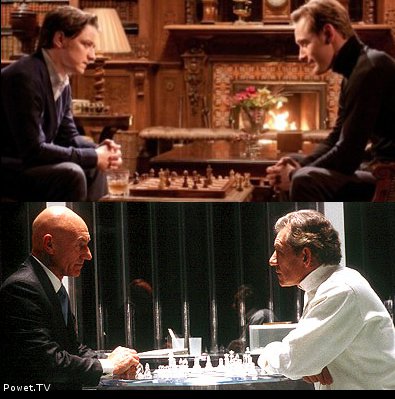
movie-xavier-and-magneto-chessSome of the best conflicts usually happen within the same alliance, as opposed to the standard “my team is better than yours,” spiel. Take the classic example of Professor Xavier and Magneto from the X-Men series, particularly the First Class storyline.

Sure, as seasoned veterans of the mutant war they each have their own teams of mutants on their sides, and are at constant odds with each other on what the fate should be for humanity’s relationship with mutants. But when they were younger men still discovering and developing their own respective abilities, they were friends. Together they formed the first team of X-Men that ended up dividing due to a conflict of interest.

Professor X wanted to train fellow mutants and help them understand their own unique powers, but wants to keep them blended into society, if not hidden from it completely. After all, the world would not have be ready to accept these strange individuals.

Meanwhile, Magneto wanted mutants to embrace their individuality and stand out from the rest of society. That they should be world reknown and a force to be reckoned with if they were met with disgust and indifference. This causes him to rile against a world that initially becomes afraid that such beings exist.

Professor X and Magneto admire each other’s abilities and tenacity, but this clash of values is what creates nearly a century long feud between the two. Yet despite of all the broken bones and epic fights between their factions, along with all the havoc and destruction the common populace has to experience amidst all this…the two can still kick back and have a nice little ol’  game of chess and chill like old times as old timers.

X-Men features a huge cast of different mutants, some more popular than others–

*coughcoughWolverine>Cyclopscoughcough*

and they all have their own ways in which they relate with each other.

Photo credit: http://www.examiner.com

How I Met Your Mother By Becoming a Better Friend

However, a personal preference of mine is to keep casts to a smaller number. A handful of characters is all you ever really need to write compelling fiction that’s rich with unique relationships between all individuals. Such is this case with one of my favourite sitcoms How I Met Your Mother.

Here’s a quick and digestable Mind Map I made to outline the value they each offered to the other.

himym relations

Fiction is Friction

Despite of the value characters can offer to each other, the assisstance in growth is always met with resistance from whom they’re trying to help, either intentionally or unintentionally. The most potent and blatant clash of values in HIMYM is between the hopeless romantic Ted and the womanizer Barney. They’re polar opposites, yet they’re best friends. Why? Because they have a lot to teach each other.

how-i-met-your-mother-season-9-spoilersBarney shows Ted how to have a good time, how to act instead of over thinking everything, and not be so stuck on finding “the one,” which ironically inhibits Ted from having any success. He’s got his head so stuck in the clouds that he needs Barney to pull him down to Earth.

Likewise, Ted teaches Barney the consequences of screwing around with too many women. He shows Barney that true happiness can only derive through monogamy as opposed to an endless string one night stands. Barney’s behaviour derives from a great place of hurt from his childhood and romantic history. Seeing his bestfriend Ted get hurt over and over again, but still have the hope that he could find his true love becomes, much to Barney’s detrement, an inspiration to him.

Ted and Barney undo each other’s illusions by pulling each other out of their extremes so that they can meet somewhere in the middle. But it’s not like they initially accept each other’s differences from the get go. It is usually met with messy and hilarious hijinx.

A Peephole Into Another Reality

Reading or watching a piece of fiction gives us the chance to eavesdrop on some of the most vulnerable exchanges between people. It cuts through the mundane day to day conversations about sports and the weather, and in turn, highlights the challenging and life changing conversations that most people tend to avoid.

We are drawn to stories because we get to sit back as objective and passive participants to watch how these characters maintain or diminish their relationships. Fiction helps illustrate how people from different walks of life can find common ground…or not. All fiction ends with either a resolution between people’s differences or an even wider divide between them.

What are your favourite ensembles of characters?

Do any of their relationships mirror some of your own?

What have you learned about relationships through your consumption of fiction?

How much more interesting can your fiction become if you focused more on character relationships and development instead of crafting a compelling plot?

I would argue that intense focus on character relationships and development CREATE compelling plots. Let me know wat you think!